
Planting Bananas is Insufficient, Here are Recommendations from Two Experts at IPB University to Prevent Monkeys from Entering Residential Areas
Planting Bananas is Insufficient, Here are Recommendations from Two Experts at IPB University to Prevent Monkeys from Entering Residential Areas
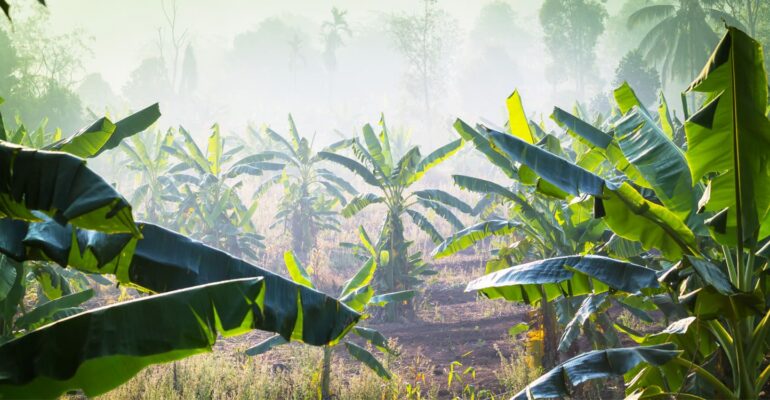
Efforts to plant bananas in monkey habitats as a solution to prevent wild monkeys from entering residential areas need to be studied more deeply by experts.
Prof Sobir, an expert in tropical fruits at IPB University, believes that planting bananas cannot be the only solution. According to him, monkeys do not only have a preference for bananas. Therefore, consultation with primate experts is needed to ensure that the policies taken are on target.
“I am concerned that bananas alone will not solve the problem. This is related to the potential preferences of monkeys, which are not limited to bananas. Careful consideration is needed to avoid increasing the monkey population,” said Prof Sobir.
He explained that the type of banana chosen should not be one that is consumed by humans, such as plantains, so that it is not taken by humans.
In addition, the bananas planted must be able to bear fruit throughout the year, especially during the dry season, be resistant to disease, and require minimal maintenance so that costs remain low. According to him, the size of the planting area must be adjusted to the monkey population in the area.
Prof Sobir also suggested that planting should not be done in monoculture so as not to interfere with the conservation of other trees in the surrounding area. A combination of other feed crops can be adjusted to the monkeys’ preferences, but must still be carefully designed.
Primatologist Prof Huda Darusman from IPB University also emphasized the same point. He stated that planting bananas can only be one of the efforts to reduce the movement of wild monkeys, not the main solution.
According to him, providing feeding facilities in natural habitats has the potential to restrain monkey movements, but the biggest challenge is the adequacy and sustainability of the availability of such feed.
“It’s not just bananas or food trees, but also the complementary ecosystem,” explained Prof Huda, who currently serves as Chairman of the Primate Study Center at IPB University.
“Without proper management, the artificial or man-made provision of additional food has the potential to cause other problems, namely population control in the area,” he said.
Therefore, he recommends long-term solutions including translocation efforts accompanied by reproductive control measures such as sterilization of primates in order to reduce their population. In addition, comprehensive information on the behavior, habitat, population, and distribution of primates is needed so that mitigation efforts can be more effective and appropriate.
Both experts agree that without comprehensive, ecology based planning, efforts to plant food sources risk failing to resolve human and monkey conflicts, may even worsen existing conditions. (dh) (IAAS/EPK)

