Is It True That Buying Fuel During the Day Results in Less Volume? Here Is the Explanation from an IPB University Expert
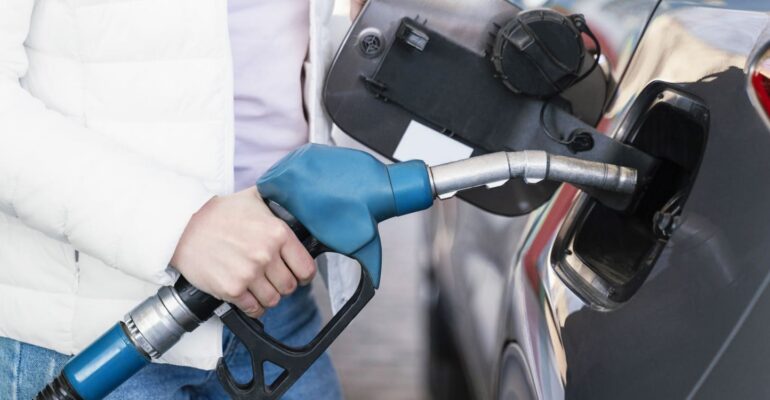
The assumption among the public that purchasing fuel (BBM) during the day results in a smaller quantity compared to the evening often raises concerns.
In response to this matter, a lecturer from the Department of Agricultural and Bio-system Engineering at IPB University, Dr Leopold Oscar Nelwan, explained that scientifically, this assumption is not entirely incorrect, but the effect is insignificant.
“The difference does indeed exist. It is simply very small and insignificant in the practice of daily vehicle usage,” clarified Dr Leopold.
In terms of physics, Dr Leopold explained that fuels such as gasoline and diesel undergo thermal expansion when temperatures rise. This expansion causes the volume of the fuel to increase slightly, while its mass and total energy content remain constant.
“Physically, this is a natural property of fluids. When the temperature rises, the volume increases, but the amount of energy does not change,” he stated.
He explained that the magnitude of expansion can be estimated using the volumetric expansion coefficient. For gasoline, the coefficient ranges from 0,00095–0,0011 per degree Celsius, whereas for diesel, it is approximately 0,0007–0,0009 per degree Celsius.
The current BBM sales system is volume based, not mass-based, thus theoretically, temperature can indeed affect the volume received by consumers.
In the upstream supply chain, fuel volume is generally corrected to a standard temperature of 15°C. However, in the downstream sector or at the consumer level, such correction is not yet mandatory. Consequently, for the same volume, differences in mass and energy content can occur if the BBM temperature differs.
Because BBM storage tanks are designed with specific insulation, the effect of environmental temperature is not excessive, consequently, the temperature difference of fuel between day and night is also not very significant.
As an illustration, Dr Leopold gave an example of filling 40 liters of gasoline during the day, assuming the fuel temperature is around 2–3°C higher than at night. With a gasoline expansion coefficient of approximately 0,001 per degree Celsius, the volume difference related to temperature is estimated to be less than 0,1 liters per 40 liters. “For diesel, the difference is even smaller,” he clarified.
In practical driving terms, this difference is equivalent to a few kilometers of travel distance and is heavily influenced by other factors, such as driving style, traffic conditions, tire pressure, and vehicle condition.
Therefore, he advises that the public does not need to set a specific time to refuel. According to him, factors of comfort, safety, and travel necessities are far more important than choosing between day or night.
“If one deliberately goes out at night just to refuel, traveling a distance of several kilometers, it is possible that even more BBM will be consumed in the process,” he remarked.
He also emphasized the importance of focusing on the number of liters according to one’s needs and the quality of service at the gas station (SPBU), as well as maintaining the vehicle’s condition so that fuel efficiency is more tangibly felt.
Dr Leopold reiterated that liter-based BBM sales are a practical agreement. Although physically the energy content per liter may change slightly due to temperature, the difference is minor and natural. (dr) (IAAS/HNF)