
IPB University and Kagoshima University Strengthen Sustainable Global Research Collaboration
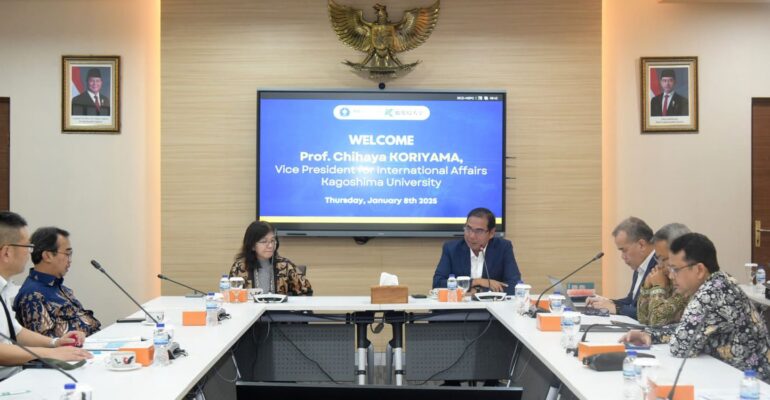
As part of efforts to expand global networks and strengthen international research collaboration, IPB University welcomed a delegation from Kagoshima University, Japan, at the IPB Dramaga Campus, Bogor, on Thursday (1/8).
This visit became an important momentum to deepen cooperation between the two institutions in the fields of higher education, research, and the development of sustainable innovation.
Rector Dr Alim Setiawan Slamet affirmed IPB University’s commitment to building international partnerships with tangible impact. He assessed that collaboration with Kagoshima University holds strategic value, particularly in the development of research and innovation in agriculture, marine sciences, and tropical biosciences.
“IPB University is committed to becoming a strategic partner in driving innovation, strengthening capacity, and developing human resources to support transformation and sustainable development,” said Dr Alim.
He added that IPB University continues to promote impactful research through cross disciplinary collaboration. This effort is reflected in IPB University’s achievement of being ranked among the world’s leading universities for interdisciplinary research.
Through the strengthening of the technosocio entrepreneurial university ecosystem and various flagship programs, IPB University focuses on the downstreaming of innovations that address real societal needs. Research based innovations, Dr Alim explained, are directed toward empowering farmers, fishers, and the wider community in order to generate sustainable social and economic impacts.
Meanwhile, Prof Chihaya Koriyama, Vice President of Kagoshima University, expressed appreciation for the long standing cooperative relationship that has been established between Kagoshima University and IPB University. According to her, IPB University possesses significant strengths in the fields of agriculture, veterinary medicine, and food science.
“We see IPB University as a very strong partner. This collaboration opens up great opportunities for the development of joint research and future academic exchange,” she stated.
She hoped that the cooperation would not only focus on education and research, but also contribute to preparing a new generation of researchers capable of providing concrete solutions to global societal challenges. (AS) (IAAS/KAL)

