
Guiding Smart Cooperative Houses in Kebalen, Bekasi
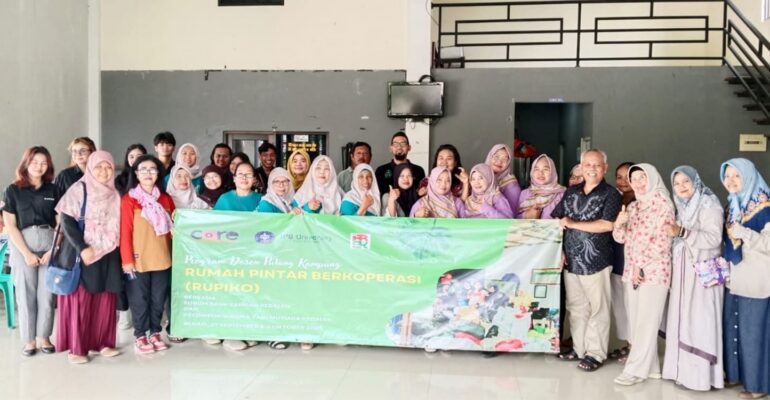
As an effort to empower the community based on the environment and creative economy, the IPB University lecturer team implemented a Homecoming Lectures program entitled “Branding Waste Banks and KWT towards Smart Cooperative Houses (Rupiko)”.
Held in Kebalen Village, Babelan District, Bekasi City, the activity was attended by around 50 participants, involving the Mutiara 19 Women Farmers Group (KWT), the Mutiara Kebalen Waste Bank Forum, village officials, and local youth organizations.
In the first session (9/27), the activity focused on urban farming and financial literacy training. The team—consisting of Dr Yeti Lis Purnamadewi, Prof Didik Suhardjito, Sulasih, SP, MSi, and Fitria Dewi Raswatie, SP, MSi—trained participants in simple financial record keeping for institutions such as KWT and Waste Banks.
“The process of recording money coming in and going out in the group must be orderly so that community economic activities can be transparent and accountable,” said Dr Dahri Tanjung, as the resource person for the activity.
Meanwhile, participants received training on land preparation, plant maintenance, and the use of narrow land using polybags or hydroponic systems.
Sulasih, SP, MSi added the importance of community creativity in utilizing narrow land to produce value-added products.
“We encourage residents to be creative in processing urban agricultural products so that they not only produce primary products, but also processed products that can increase income,” she said.
Dr Yeti Lis Purnamadewi and Yulia Puspadewi Wulandari, SP also emphasized the importance of urban farming in strengthening family food security and maintaining the quality of the urban environment.
“We are grateful to IPB and all parties involved. This training is very beneficial, especially since our area is already part of an urban area that needs to maintain a balance between the environment and the community’s economy,” said the Head of the Kebalen Village RW Forum, expressing his appreciation for this activity.
On (10/4), the activity continued with a focus on branding strategies for KWT and Bank Sampah as well as an introduction to the concept of Rumah Pintar Berkoperasi (Rupiko).
Dr Dahri Tanjung said that Bank Sampah and KWT have an important role in building a circular economy at the grassroots level.
“Through branding activities and plans to establish Rupiko, we want to encourage the Kebalen community to be able to manage waste, increase the added value of products, and strengthen the spirit of cooperation,” he said.
Rupiko itself was introduced as a forum for education and incubation of community-based cooperative businesses, which will integrate waste management, KWT production, and digital marketing activities into a collaborative ecosystem.
“Rupiko is designed to strengthen community economic independence through environmentally friendly management of local resources,” explained Dr Yeti Lis Purnamadewi.
In a training session led by Fitria Dewi Raswatie, SP, MSi, participants also learned about creating digital promotional media and product label designs to support branding activities. Participants were enthusiastic and hoped that IPB’s assistance would continue on an ongoing basis.
Irsan Ramli, Chairman of the Kebalen Waste Bank Forum, expressed appreciation for the activity. “We thank IPB for their support and knowledge. May the waste bank and KWT in Kebalen continue to thrive and serve as an example for other RWs and even neighborhoods,” he said. (*/Rz) (IAAS/NRA)

