Does Mangosteen Peel Really Have Many Benefits? Here Is the Answer from IPB University Researchers
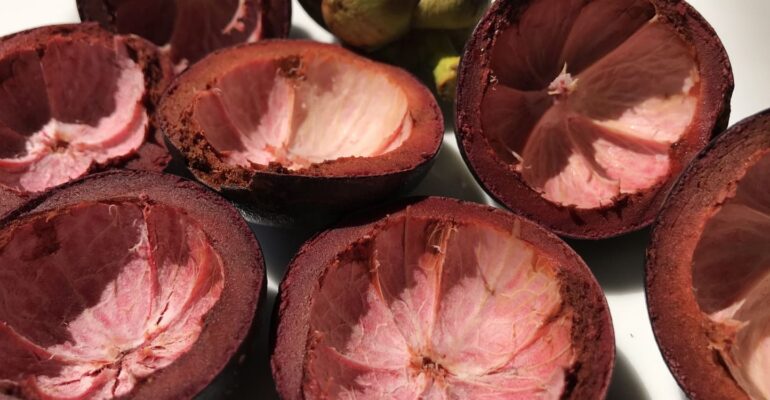
IPB University researchers continue to explore the potential of Indonesia’s natural resources. One of them is Prof Sedarnawati Yasni, a lecturer at the Department of Food Science and Technology, IPB University, who researches mangosteen fruit and peel for health benefits.
According to Prof Sedarnawati, mangosteen fruit (Garcinia mangostana L.) has high pharmacological value, as its peel contains bioactive compounds that act as natural antioxidants and antidiabetic agents.
“Mangosteen flesh contains pectin and polyphenols, while the peel contains xanthones, tannins, flavonoids, and anthocyanins that act as natural antioxidants,” she explained.
These contents make mangosteen potentially viable for development as a raw material for functional food and pharmaceutical products.
Various studies report that bioactive compounds in mangosteen can prevent degenerative diseases such as coronary heart disease, diabetes mellitus, hypertension, stroke, cancer, and Alzheimer’s.
“In our research, 70 percent ethanol extract from mangosteen peel was proven in vitro to inhibit the activity of the alpha-amylase enzyme, which plays a role in the hydrolysis of starch into glucose,” she stated.
Thus, Prof Sedarnawati continued, “Mangosteen peel extract has the potential to lower blood glucose levels and act as an antidiabetic agent.”
However, she noted that these research results need to proceed to the in vivo stage before being developed more broadly. “Before mass production, process standardization, food safety testing, and clinical trials are needed to ensure effectiveness and safety,” she said.
Health Drink Innovation
Seeing the abundant availability of mangosteen during the peak harvest season, Prof Sedarnawati has developed various derivative products such as health drinks, nanoparticle encapsulates of mangosteen peel extract, and fruit leather based on fruit flesh puree combined with the peel extract.
“This innovation not only extends the fruit’s shelf life but also increases its economic added value,” said the researcher who has now formulated up to 17 types of Indonesian spices to produce health drinks.
She added that the production process must consider variety, harvest season, post-harvest techniques, and laboratory analysis. “70 percent ethanol extract is generally safe, but it still needs to be studied for usage dosage, toxicity tests, stability, and compliance with GMP (Good Manufacturing Practices),” she explained.
To increase the effectiveness of bioactive compounds, Prof Sedarnawati applies nanoencapsulation technology that maintains the stability of xanthone compounds against damage from heat or oxidation, making them easier for the body to absorb.
Although promising, product development from mangosteen peel still faces challenges, such as sustainable raw material supply, technological efficiency, financing, and regulations.
“With the support of applied research and academic-industrial partnerships, the potential of mangosteen peel can be optimized to support national economic resilience and health,” she concluded. (Fj) (IAAS/ANF)