
Name Three Causes of Disasters, IPB University Expert: Human-Caused Damage Should Be Most Controllable
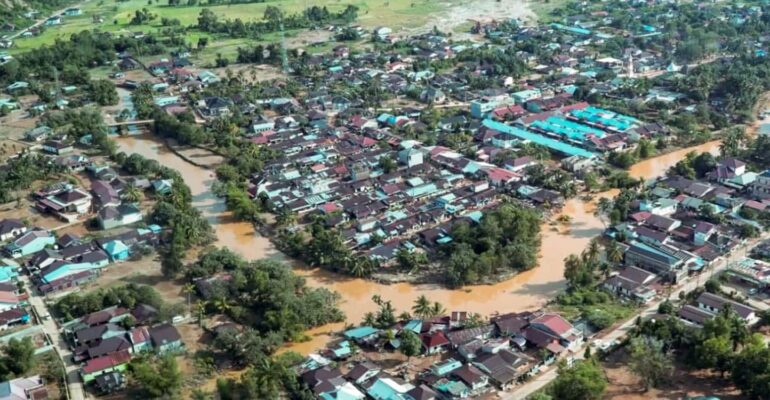
As the risk of flooding and landslides increases in various regions, Professor Dodik Nurrochmat of the Faculty of Forestry and Environment (Fahutan) at IPB University emphasizes the importance of research-based mitigation policies.
Prof Dodik explained that hydrometeorological disasters such as floods and landslides are inevitable phenomena, especially due to extreme weather. However, the risk of their impact can still be reduced through appropriate mitigation.
Three Causes of Disasters
He divided the causes of disasters into three main factors: extreme weather, geographical conditions, and environmental damage caused by human activities.
“We can mitigate the first two factors. But the third factor can be managed through regulations and environmental governance. Environmental damage caused by humans is actually the factor that we can control the most,” he said.
He reiterated the importance of utilizing research results as the basis for disaster mitigation policies. According to him, the scientific basis for mitigation has actually been available for a long time.
“At IPB, there was a 2020 dissertation that mapped the potential for flash floods and landslides in Aceh Tamiang and other areas. Scientifically, everything has been calculated. Rainfall, land cover, and landslide risk,” said Prof Dodik.
“The question is, why hasn’t this data been used as a basis for policy?” he questioned.
Prof Dodik also criticized environmental regulations, which have so far been general in nature and not based on local conditions. For example, regarding river boundary distances.
“The 50-100 meter river boundary distance rule is only a general reference. In upstream areas, even 1-2 meters is dangerous. But people hide behind regulations that are scientifically inaccurate. In the future, policies must be science-based, not just general rules,” he said.
He added that environmental policies must refer to the carrying capacity and capacity of the environment, not just administrative boundaries.
Prof Dodik also emphasized the importance of shifting the orientation of environmental sanctions from simply large fines to real environmental restoration. “Hundreds of trillions in fines are meaningless if they are not used to restore the environment. Law No. 32 of 2009 clearly mandates environmental restoration as the primary sanction,” he explained.
Prof Dodik hopes that the floods and landslides that hit Aceh, North Sumatra, and West Sumatra will serve as an important lesson for improving the national mitigation system.
“Disasters may be unavoidable, but we can reduce the risks. With nature-based research, early warning systems, and proper governance, we can mitigate the impact of disasters,” he concluded. (AS) (IAAS/ASY)

