
IPB University Sociologist: Disasters in Aceh, North Sumatra, and West Sumatra Have Also Undermined Village Social Systems
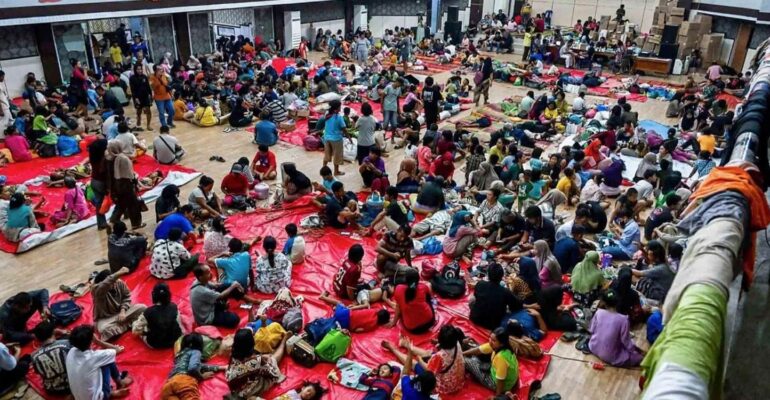
Rural Sociology expert from IPB University, Dr Ivanovich Agusta, highlighted the often overlooked social impacts that emerge in the aftermath of disasters.
“Disasters do not only destroy physical structures, but also damage the social systems that preserve the cohesion and identity of villages,” he said, referring to the recent floods and landslides that struck various regions in Aceh, North Sumatra, and West Sumatra.
After a disaster, rural communities face sudden disruption in their social structures and interpersonal relations. One of the most visible impacts is social dislocation— the loss of communal spaces such as village halls, prayer rooms, markets, and roads that serve as centers of community interaction.
“When these spaces disappear, the rhythm of village life is broken. Interactions weaken, communication becomes disrupted, and social solidarity is put to the test,” he explained.
Beyond physical destruction, disasters also trigger psychosocial pressures including fear, trauma, and uncertainty about the future. This situation affects people’s motivation to work and reduces their participation in social activities.
Moreover, village social institutions are disrupted. Farmers’ planting schedules, farmer-group activities, community gatherings, posyandu services, and religious events are temporarily halted due to damaged areas and limited access.
“The interruption of these social institutions significantly weakens community integration. These institutions have long served as the backbone of rural social strength,” he noted.
According to Dr Ivanovich, children, women, the elderly, and farmers are the most vulnerable groups. Children risk losing their sense of safety and access to education. Women often bear a double burden caring for family needs while ensuring the safety of children and the elderly amid extremely limited resources. Meanwhile, elderly individuals face mobility limitations, pre-existing illnesses, and dependence on family members.
“Farmers experience the most severe long-term impacts due to damaged land, destroyed irrigation, lost livestock, and the collapse of the production cycle. Their vulnerability is both ecological and socio-economic,” he stated.
Risk of Social Conflict
In disaster-affected areas, Dr Ivanovich also warned of potential social conflict and jealousy related to aid distribution. This situation can stem from unclear beneficiary data, lack of transparency, and uneven or inappropriate distribution of assistance.
“In disaster situations, psychological exhaustion makes communities more sensitive. Even small inequalities can spark social jealousy,” he said.
He added that local leaders involvement may sometimes be perceived negatively if communities suspect favoritism towards certain groups or relatives.
Dr Ivanovich emphasized that while disasters can foster solidarity, they can also weaken social cohesion if recovery is not well managed.
“Mutual cooperation tends to be very strong during the initial phase, when residents help each other. But in the medium term, collective fatigue and uncertainty in recovery can erode solidarity,” he said.
Public trust in the government also depends heavily on the speed, accuracy, and transparency of disaster response.
“If aid is delivered quickly and fairly, trust strengthens. If it is slow and unclear, frustration and apathy grow,” he added.
According to Dr Ivanovich, post-disaster community recovery must be carried out comprehensively by strengthening psychosocial support, reactivating social institutions, ensuring transparent and participatory data collection, restoring livelihoods, strengthening village governance, and developing community-based mitigation and disaster preparedness systems.
“Disasters are not only about today, they are about how we rebuild the social resilience of villages for the future,” he concluded. (IAAS/MRM)

