
IPB University Researcher: Sumatra Experiences the Highest Loss of Biodiversity in Indonesia
Sumatra Island has shown the highest trend of biodiversity loss compared to other regions in Indonesia over the past few years. This was revealed by IPB University Professor of Landscape Management, Prof Syartinilia, during the “LRI TALK #3 Together Protecting Sumatra” event.
“Analysis at the meso scale on Sumatra Island using the Biodiversity Intactness Index (BII) shows that, based on global data for the 2017–2020 period, Sumatra has recorded the highest rate of biodiversity loss in Indonesia.,” she said.
Prof Syartinilia said, “In a business-as-usual scenario, biodiversity loss by 2050 is estimated to reach around 15 percent, while in a sustainability scenario it can be reduced to around 11 percent.”
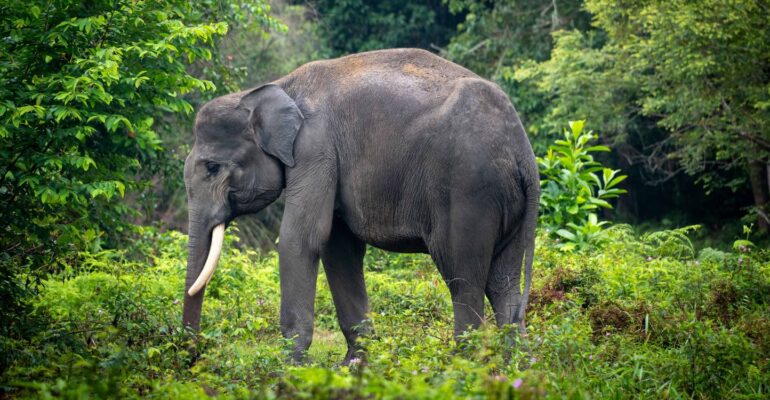
Further analysis was conducted on the habitats of key and charismatic species, such as elephants, orangutans, and Sumatran tigers. She explained that in the business as usual scenario, elephant habitat is projected to decline by 66 percent, while in the sustainability scenario there is the potential for a 5 percent increase in habitat.
Therefore, she emphasized, “A sustainable approach has proven to be effective in significantly reducing habitat loss,” she said.
Based on the results of this analysis, Prof Syartinilia recommended various adaptation measures, including focused restoration, community based conservation, integrated landscape management, mitigation of direct threats, and large scale conservation investments, with the island of Sumatra as a priority area.
Indonesia’s Ecosystem Projection 2050
Prof Syartinilia presented a comprehensive study of Indonesia’s ecosystem projection from an anthropogenic and climate change perspective. This study highlights the dynamics of national ecosystem vulnerability until 2050 as a basis for formulating climate change adaptation priorities.
The approach used in this research is a multiscale approach, ranging from the national to the island level. At the national level, the research team conducted an overlay analysis between climate exposure and terrestrial ecosystem quality as measured by vegetation indices. From these two variables, landscape vulnerability levels were compiled into nine levels.
“The results show that nationally, Indonesia is still dominated by low to moderate vulnerability, although there are areas with high vulnerability,” explained the lecturer at the Faculty of Agriculture and Secretary of the IPB University’s International Institute for Environmental and Climate Change Research (LRI LPI).
When analyzed based on ecosystem type, it was found that wetland ecosystems and mountain ecosystems are the two most vulnerable ecosystem types nationally.
“Spatially, Sumatra Island is recorded as the region with the highest vulnerability level, followed by Papua, Kalimantan, and Maluku,” she elaborated.
Prof Syartinilia said that this study is part of an analysis compiled by IPB University for the National Communication document, specifically in the sector of climate change adaptation in the field of ecosystems. The analysis is not only based on historical data, but also projects future ecosystem conditions based on the dynamics of changes that have occurred.
“This study not only looks at what has happened in the past, but also tries to project into the future based on existing dynamics of change,” she said.
She emphasized that climate change cannot be separated from human activities on a landscape scale. The phenomena of rising temperatures, shifting rainfall patterns, increased extreme weather events, rising sea levels, and changes in biodiversity are interrelated processes.
“Anthropogenic factors have a significant contribution in amplifying the impact of climate change on Indonesia’s ecosystems,” said Prof Syartinilia. (dr) (IAAS/NVA)

