
IPB University Introduces ICAN as a Center of Excellence for Social Forestry Development
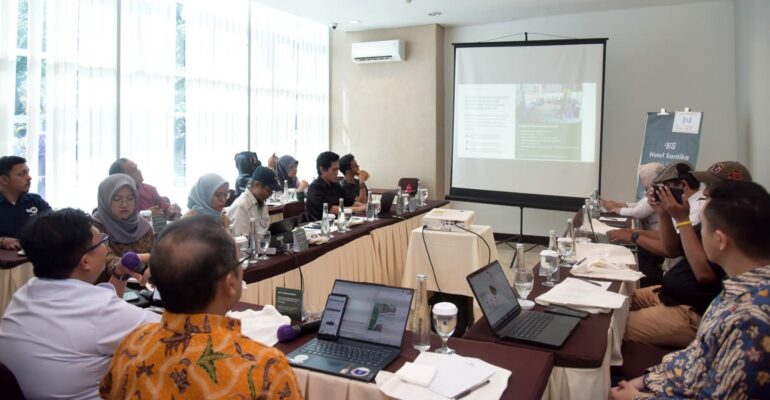
IPB University introduces the IPB Center for Applied Research in Nature-based Solutions (ICAN) as a center of excellence for the development of nature-based solutions, including social forestry.
ICAN is supported by Fincape, which collaborates with the Canadian government through the University of Waterloo. Established in December 2024, this research center is expected to become a space for cross-disciplinary collaboration and open up opportunities for partnerships with various parties.
“ICAN is designed to be an independent and sustainable center of excellence. This research center will also involve various faculties at IPB,” said Dean of the Faculty of Forestry and Environment (Fahutan) IPB University Prof Naresworo Nugroho to the media at Hotel Santika Bogor, (11/25).
One of the researchers at Fahutan IPB University, Prof Dodik Ridho Nurrochmat, added that ICAN is projected to become a partner of the government in various environmental programs.
“Research results should not stop after the project is completed, but should continue to provide benefits. Through ICAN, research results will be developed into evidence-based policy recommendations by involving the community, non-profit organizations (NGOs), academics, and the private sector,” he said.
The Dean of the IPB University Graduate School also emphasized the importance of developing a nature-based ecosystem in Indonesia. He highlighted the suboptimal socio-economic benefits of social forestry. “Governance is still not inclusive. There is a gap between the ideal concept and the reality in the field,” he said.
According to Prof Dodik, of the total 8,3 million hectares of social forestry, only about half is managed. Of the 15.758 social forestry business groups, only 1.470, or about 9 percent, are considered productive. Community income is also still low.
“Per hectare per year, it is only around 600 thousand rupiah, far below non-social forestry management, which reaches 4 million rupiah. When compared to palm oil, the figure is even smaller. This could trigger land conversion,” he said.
Meanwhile, Fincape Field Finance Manager Mindawati Azmi explained that one of the focuses of her institution’s program is the development of nature-based solutions (NBS).
“We have been working with IPB University and Fahutan through an MoU since 2023,” she said. Fincape, she said, also supports the development of an NBS study center in water research, mangrove restoration, and peat as a living lab.
With a transdisciplinary approach and a focus on forestry and the environment, ICAN is expected to be a driver of nature-based solutions to support sustainability in Indonesia. (dh) (IAAS/NRA)

