IPB University Horsemanship Expert Encourages Protection of Child Jockeys and Welfare of Traditional Racehorses
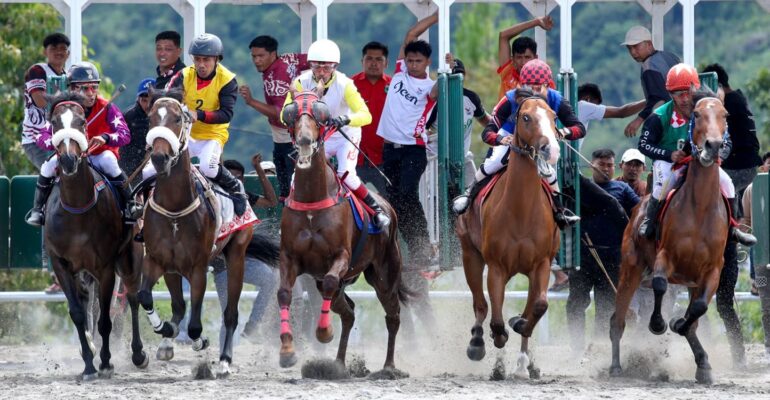
National Horse Day, celebrated every December 13, is an important moment to reaffirm the protection of child jockeys’ safety and the welfare of traditional racehorses.
The stance taken by Dompu Regent Bambang Firdaus, SE, regarding the practice of child jockeys in horse racing events recently has prompted the need for concrete and measurable steps from the Indonesian Equestrian Sports Association (Pordasi) to ensure that traditions are preserved without compromising children’s rights and animal welfare.
From a medical perspective, horsemanship and equine industry expert from IPB University, Dr Budhy Jasa Widyananta, MSi, revealed that the risks of horse racing with underage jockeys are very high, both for children and racehorses.
“The risks for jockeys include being kicked, bitten, falling, thrown, or even crushed by horses, resulting in injuries ranging from minor to fatal. Mental trauma and permanent disabilities can harm the child’s future and that of their family,” he said.
Meanwhile, he continued, racehorses risk injuries to vital tissues and organs due to falls or collisions, which can lead to paralysis or death.
“Horse deaths generally occur due to cardiogenic, neurogenic, or hypovolemic shock, or euthanasia,” he explained. He added that violations of horse welfare, such as drug abuse, overtraining, and excessive use of whips, are risk factors for racing accidents according to the International Horse Racing Association.
The lack of uniform traditional racing standards in each region is the biggest challenge in the field. At the same time, awareness of the root causes of accidents is still low. “Without agreed-upon written rules and sanctions, the safety of jockeys and horses will always be at stake,” he said.
Therefore, he suggested drafting technical regulations as a simpler derivative of the performance horse racing PO. For example, regulations related to the minimum age limit for jockeys, the use of safety equipment such as helmets and body protectors, training standards, horse health checks, and race track standards.
“Written regulations that are agreed upon can protect against negligence and intentional acts because they have concrete and measurable limits and sanctions,” he said.
Responding to the views of the Stop Child Jockeys Coalition, Budhy assessed that the root of the problem of child jockeys is complex, covering economic, cultural, and horsemanship education factors, as well as weak regulations. “The best solution can only emerge from the synergy of all parties with positive, solution-oriented, and innovative perspectives,” he emphasized. (Fj) (IAAS/LAN)