Appreciation for YESS, Prof Irfan Syauqi Beik: Cross-Country Networks Foster the Competitiveness of Young Farmers
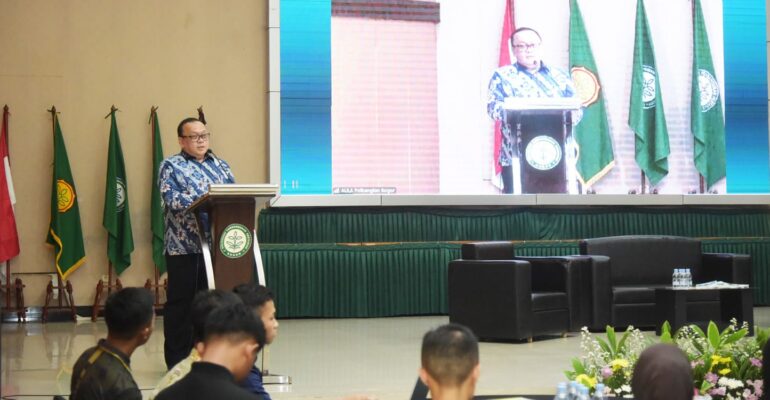
Building young agricultural entrepreneurship requires more than just capital and technical skills. Networks, especially cross-country networks, are an important foundation for young farmers to grow, become competitive, and be sustainable.
This was emphasized by the Dean of the Faculty of Economics and Management at IPB University, Prof Irfan Syauqi Beik, during the event “Building Alliances and Networks for Empowering Young Farmers through IFAD’s Support: Youth Agripreneurs in Action” at the Agricultural Development Polytechnic (Polbangtan), Bogor, (12/9).
According to Prof Irfan, the Youth Entrepreneurship and Employment Support Services (YESS) program supported by the International Fund for Agricultural Development (IFAD) not only produces young farmers but also builds a foundation for strategic networks across regions and countries.
“Networks are an extraordinary asset. When alumni of IFAD programs such as YESS are able to build cross-border networks, opportunities for the exchange of experiences and ideas will arise, leading to increased trade and exports,” said Prof Irfan.
He emphasized that the ability to build networks does not happen instantly. It requires systematic planning through appropriate programs and learning designs. Therefore, he considered the theme of the international workshop, which encourages alliances between young farmer associations, to be a visionary step.
“Building synergy and alliances is key. With a solid network, agricultural economic growth will occur much faster,” he added.
This activity also reaffirmed the strategic role of the YESS program in strengthening the young agricultural entrepreneur ecosystem in Indonesia. The Director of the Agricultural Human Resources Extension and Development Agency (BPPSDMP) of the Indonesian Ministry of Agriculture, Dr Idha Widi Arsanti, said that the YESS program has been a catalyst for the emergence of independent and competitive young farmers.
“YESS has reached more than 300.000 young people in five years of implementation and has become a strategic stepping stone for the growth of young agricultural entrepreneurs,” she said.
She explained that YESS not only provides technical training in cultivation but also strengthens the business capacity and networks of young farmers.
“We don’t want young people to start their businesses from scratch. Through mentoring and network strengthening, the risk of failure can be minimized and business opportunities become more accessible,” she added.
Through collaboration with educational institutions, farmer associations, the private sector, and international forums, the YESS program continues to encourage the formation of regional and global networks that strengthen the agribusiness of young Indonesian farmers.
With these achievements, Prof Irfan hopes that programs such as YESS can continue to be expanded so that more young people will be interested and confident in participating in the agricultural sector.
“Being a young farmer is something to be proud of and profitable. Our task is to ensure the ecosystem is ready, the support is appropriate, and the networks are widely open,” he concluded. (AS) (IAAS/FMT)