
IPB University Lecturer Explains the Phenomenon of 3I/ATLAS, a Visitor from Beyond the Solar System
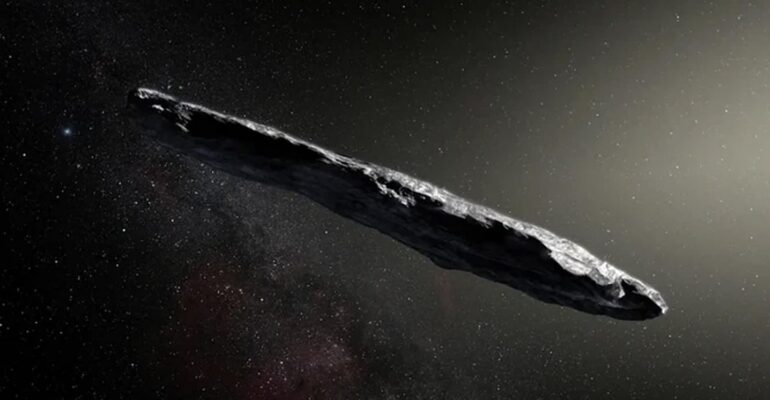
An astronomical phenomenon has recently drawn global scientific attention. The interstellar object known as 3I/ATLAS is currently passing through the Solar System, captivating researchers as it becomes the third confirmed interstellar object, following 1I/ʻOumuamua (2017) and 2I/Borisov (2019).
According to Izatul Hafizah, SSi, MSi, a lecturer at the Department of Geophysics and Meteorology, IPB University, interstellar objects are small celestial bodies such as comets or asteroids that did not form within our Solar System.
“3I/ATLAS is categorized as an interstellar object because its trajectory is hyperbolic and it does not orbit the Sun permanently, which confirms that it originated from outside the Solar System,” she explained.
She further described that objects like 3I/ATLAS likely formed during the early stages of stellar system formation. In the initial phase of star and planet formation, many icy or rocky fragments can be ejected from their parent systems due to gravitational interactions. These objects then drift through interstellar space for an extremely long time.
“When one of them passes close to the Sun, as in the case of 3I/ATLAS, we have the opportunity to study its composition and behavior,” she added.
Scientifically, the discovery of interstellar objects like 3I/ATLAS does not directly explain the dynamics of the galaxy as a whole, but it provides important evidence that material exchange occurs between stellar systems within the Milky Way Galaxy.
“This finding reminds us that the Solar System is not a closed system, but part of a dynamic galactic environment,” she emphasized.
Regarding the possibility of the next interstellar visitor, Izatul noted that there is currently no reliable way to predict when such an object will arrive.
“These objects are extremely faint and can only be detected once they come close enough to Earth. However, advancements in modern survey telescopes are improving our chances of discovering them earlier in the future,” she said.
Discoveries like 3I/ATLAS serve as a reminder that interstellar space still holds countless mysteries waiting to be explored. (/dr) (IAAS/AVM)

