IPB University Expert: Habitat Degradation in Bengkulu Pushes Sumatran Elephants to the Brink of Extinction
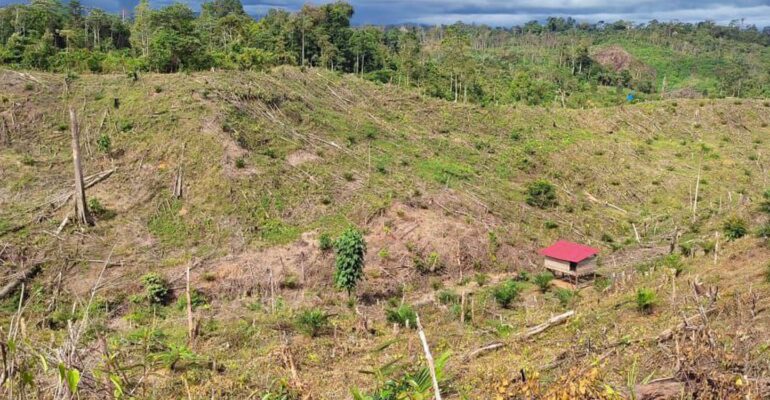
Massive deforestation in the Seblat landscape, Bengkulu, has sparked serious concerns among conservation experts, one of whom is Prof Burhanuddin Masyud.
The IPB University expert in ecology and wildlife management said that the current situation is not just a matter of reduced forest cover. “This is a systemic threat that is eroding the foundation of the Sumatran elephant population’s survival,” he said.
The latest data shows that at least 1.585 hectares of Sumatran elephant habitat were lost between January 2024 and October 2025. This figure does not include an estimated 4.000 hectares of illegal encroachment, which is strongly suspected to have been converted into oil palm plantations.
“What is happening in Bengkulu is not just the loss of forests, but a direct attack on the ecology, reproduction, and balance of interaction between elephants and the environment. The impact will be multi-layered and long-term,” he said.
Prof Burhanuddin explained that the lost area is part of the seasonal migration corridor in the Lebong Kandis Limited Production Forest (HPT). This corridor serves as a migration route, a source of food, and a space that facilitates the natural reproduction process.
“If the seasonal corridor is lost, the synchronization of physiological behavior for mating can be disrupted. When reproduction is disrupted, population decline is inevitable,” he emphasized.
He added that the acceleration of forest conversion into plantations, cultivated land, and settlements increases the potential for human-elephant conflict. Similar phenomena have occurred previously in Aceh and Riau, which have recorded high elephant mortality due to poaching, poisoning, and collisions with human activities.
According to Prof Burhanuddin, the root of the problem is the dominance of economic orientation in land use policies. “Much of the conversion occurs illegally. Ecological corridors are hardly considered in policy-making. What dominates is short-term financial value,” he explained.
At the community level, the perception that elephants are pests also exacerbates the situation. “Without education and intervention, this perception can encourage dangerous actions such as poisoning or killing elephants,” he added.
As a strategic step, Prof Burhanuddin emphasized the importance of inter-agency coordination to remap elephant roaming areas, especially those connected to Kerinci Seblat National Park. He also highlighted the importance of implementing Law No. 32/2024 on Natural Resources and Ecosystem Conservation, especially regarding the establishment of preservation areas such as ecological corridors and high conservation value areas.
In addition, he considered the development of elephant conservation areas using a flying squad approach to be a realistic solution that has proven effective in Tesso Nilo National Park, Riau. This program, he said, not only reduces conflict but also opens up opportunities for educational tourism for the community.
“Community involvement is key. Without them, conservation will only be a policy document without implementation,” concluded Prof Burhanuddin. (AS) (IAAS/NVA)