ChatGPT for Children: A Learning Companion or a Threat to Cognitive Development? IPB University AI Expert Shares Insights
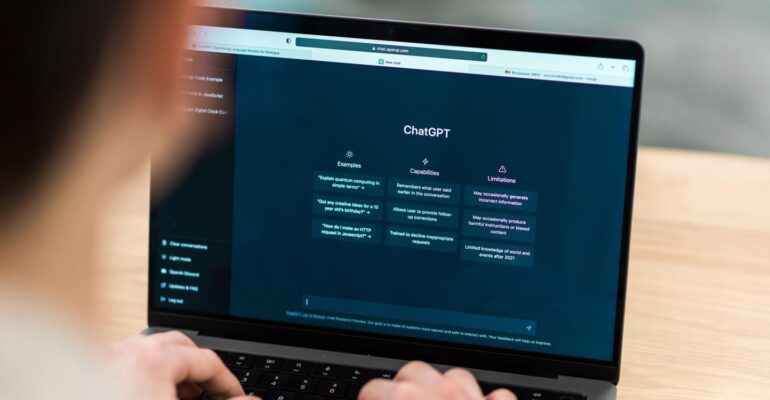
ChatGPT is becoming increasingly popular among children and teenagers. This artificial intelligence (AI) technology can serve as an engaging learning companion—helping answer questions, complete assignments, and even spark curiosity.
However, experts warn that early exposure to ChatGPT must be approached with caution. Overreliance on the tool may hinder critical thinking, create dependency, and expose children to age-inappropriate information.
These concerns were raised by Prof Yeni Herdiyeni, Professor at the School of Data Science, Mathematics, and Informatics, IPB University, during an episode of IPB Pedia broadcast on IPB TV’s YouTube channel.
Prof Yeni, who also serves as the Chairperson of the Artificial Intelligence Study Program at IPB University, explained that the use of ChatGPT among children must be handled with great care.
“This technology has two sides, positive and negative. On the positive side, ChatGPT helps us explore knowledge more easily. But if it’s used instantly without critical thinking, a child’s brain will not be trained to think,” said Prof Yeni.
She further noted that while ChatGPT provides quick and practical access to information, excessive use can weaken children’s cognitive abilities.
“When we search for something directly through ChatGPT, the information appears instantly but we may quickly forget it afterward. The brain doesn’t get the chance to practice remembering and analyzing,” she explained.
This technology, said Prof Yeni, is actually safer for adults who are able to verify the accuracy of information. “For young children, such as elementary school students, the use of ChatGPT should be supervised.”
“Children still need to develop their motor and cognitive skills. If these are replaced by ChatGPT, their brain development may not reach its full potential,” she added.
From a technical standpoint, Prof Yeni explained that ChatGPT was designed to mimic the human brain’s working principles through transformer technology and long short-term memory (LSTM) algorithms.
Nevertheless, the system still has weaknesses such as bias and data hallucination, which may mislead users. “That’s why people must understand that not all ChatGPT responses are correct,” she warned.
Regarding early AI education, Prof Yeni suggested that the government should prioritize strengthening computational thinking rather than merely teaching coding skills.
“Computational thinking trains the human brain to solve problems, think logically, and recognize patterns. Coding is only an implementation of those skills,” she clarified.
Prof Yeni also advised teachers and parents not to rely solely on ChatGPT for children’s learning processes. “When children have school assignments, they should still be guided to think and find answers independently. ChatGPT can be used as a tool for support, but not as a substitute for learning,” she said.
She emphasized the importance of a human-centered approach in AI usage, meaning humans must remain at the core of technology development and application.
“Technology like ChatGPT can be an incredible learning resource if used wisely. But without proper guidance, it can easily turn into a digital trap,” she cautioned.
Prof Yeni concluded that responsible technology use is key to nurturing a generation that is intelligent, critical, and ethical in the digital era. “Parents and educators play a vital role in directing, guiding, and supervising children’s use of ChatGPT. With proper assistance, this technology can indeed become a safe and beneficial learning companion,” she said. (Fj) (IAAS/NVA)