World Food Day: The Spirit of a New Institution at IPB University Strengthens Research on Food, Nutrition, and Health
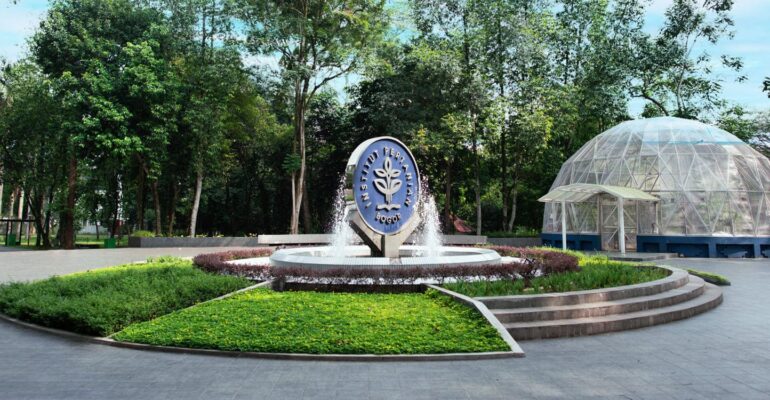
The International Research Institute for Food, Nutrition, and Health (LRI-PGK) is one of the new institutions at IPB University, established to strengthen research in the fields of food, nutrition, and health through interdisciplinary collaboration.
The presence of this institution is particularly significant during the momentum of World Food Day, when issues of food security, nutrition, and health are at the center of global attention. The challenges arising from climate change, food crises, and high rates of malnutrition demand comprehensive, integrated research that focuses on real, solution-oriented outcomes.
This year’s World Food Day carries the theme “Hand in Hand for Better Foods and a Better Future.” This theme invites all elements of society, government, academia, farmers, the private sector, and communities, to join hands in transforming food systems toward a healthier, fairer, and more sustainable future.
In response to this need, IPB University established several new research institutions in 2023, one of which is LRI-PGK. The institute is expected to become a strategic interdisciplinary research hub that can make a significant contribution to national and international development in the fields of food, nutrition, and health through the application of interdisciplinary science and cross-sector collaboration.
The Chairman of LRI-PGK IPB University, Prof Drajat Martianto, explained that the institute is responsible for planning and coordinating research implementation across various study centers working in related fields. The research approach is conducted comprehensively, covering upstream aspects such as primary production to downstream aspects such as consumption, with the goal of strengthening national food security, nutrition, and food safety.
Prof Drajat added that LRI-PGK also integrates indigenous knowledge and technology, particularly in improving productivity, health, and disease control in humans, animals, and plants.
“Research conducted at IPB University should not stop in the laboratory but must be able to deliver tangible benefits to society, the nation, and the world,” emphasized Prof Drajat.
In line with this spirit, LRI-PGK has been mandated by IPB University, Bappenas, the National Nutrition Agency (BGN), and UNICEF to become the Centre of Excellence for the Food and Nutrition Fulfillment Program (CoE PPG). The CoE PPG has four main functions: (1) capacity development through curriculum design and training for SPPG managers as well as MBG teachers and administrators in educational institutions, (2) development of model kitchens and food ecosystems that support the provision of high-quality and sustainable food, (3) knowledge management to expand learning from best practices, and (4) conducting interdisciplinary studies to support evidence-based policy in the fields of food and nutrition.
In addition, LRI-PGK has also been appointed as the Coordinator for the Inter-University Center of Excellence in Food Security and Climate Change, involving collaboration across faculties such as Faperta, FPIK, Fapet, Fateta, and Fema, as well as various research centers at IPB University.
Furthermore, over the past two years, LRI-PGK has coordinated the preparation for the establishment of the Rice Research and Innovation Center (RICE), which aims to enhance rice production, productivity, and the welfare of rice farmers in Indonesia through collaboration with the Korea International Cooperation Agency (KOICA). This initiative is coordinated with Bappenas and the Ministry of Agriculture and is currently in the final stage of the Basic Design Survey.
Various research centers under LRI-PGK coordination are currently implementing flagship programs. The Tropical Horticulture Study Center (PKHT) develops and disseminates superior varieties of shallots. The Center for Tropical Animal Studies (CENTRAS) runs the Miniature Beef Cattle Integration System on Oil Palm Land (SISKA) program, which includes cattle fattening activities, agro-edutourism area development, and the establishment of research centers focused on dairy cattle and oil palm integration.
The SISKA program has shown significant results, with a sixfold increase in cattle population across several clusters in Riau, West Kalimantan, East Kalimantan, and South Kalimantan.
Meanwhile, the South-East Asia Food and Agricultural Science and Technology (SEAFAST) Center is implementing a national food safety system strengthening program that supports the Medium-Term Development Plan (RPJM) 2025–2030, in collaboration with international partners such as WHO, Colorado State University, IRD, and PT Savica Nutrition International, as well as national institutions like Bappenas and the Ministry of Health.
At the same time, the Tropical Biopharmaca Research Center (Trop BRC) is developing standardized herbal medicine innovations, including slimming products made from Garcinia atroviridis (asam gelugur) and Kaempferia rotunda (kunci pepet), developed in collaboration with PT Indofarma Tbk. The product is targeted for commercialization by the end of 2025, accompanied by capacity-building programs for students and lecturers.
Additionally, the Halal Science Center (HSC) under LRI-PGK also conducts training and technical guidance programs for halal certification of slaughterhouses (RPH), in collaboration with Meat and Livestock Australia–Indonesia. HSC activities include halal butcher training, halal supervisor certification, technical assistance, and the organization of focus group discussions (FGDs) and community outreach.
“Through these various programs, LRI-PGK IPB University continues to strengthen its role in advancing integrative and collaborative research to address national challenges in food, nutrition, and health, while contributing to the achievement of sustainable development goals at the global level,” concluded Prof Drajat. (IAAS/Aly)