Wooden Cutting Boards That Turn Black or Change Color: Are They Still Safe to Use? Here’s What Experts at IPB University Say
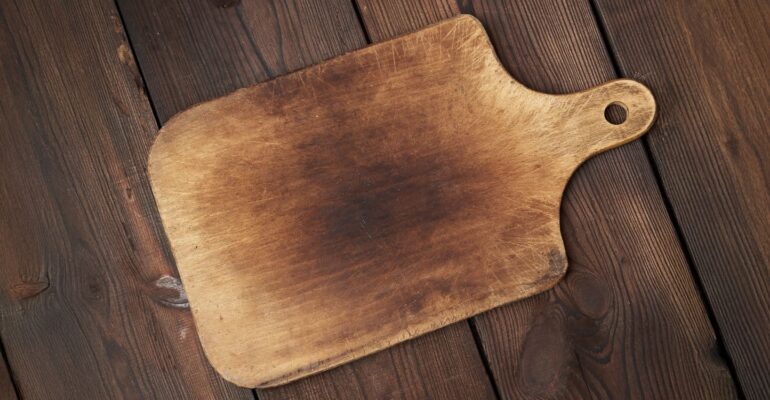
Wooden cutting boards that turn black often cause concern among the public, especially among mothers. So, are such cutting boards still safe to use for food preparation? Harum Fadhilatunnur, STP, MSc, a lecturer in Food Science and Technology at IPB University, provides an explanation on this matter.
She explains that black discoloration on cutting boards, whether made of wood or plastic, is likely caused by the growth of microbes such as mold or bacteria mixed with food residue left behind.
“Wooden cutting boards have pores that can absorb water and food residue, creating a moist environment ideal for microbial growth,” she said.
The same thing happens with plastic cutting boards. According to Harum, scratches from use can trap food residue and become a breeding ground for microbes. Some types of mold can produce black pigments or spores, which cause discoloration on cutting boards.
She added that the microbes that grow on cutting boards can be pathogenic or putrefactive microbes. These types of microbes are difficult to identify without laboratory analysis, but the risks cannot be ignored.
“If pathogenic microbes, such as Salmonella, E. coli, or Listeria monocytogenes, grow on cutting boards and contaminate food, there is a risk of health problems, ranging from short-term problems such as diarrhea to long-term problems due to the accumulation of mycotoxins,” explained Harum.
Furthermore, she advised that cutting boards should always be kept clean and dry. After use, cutting boards should be washed immediately with soap and hot water, then dried. Sanitization with disinfectants such as chlorine can also be done periodically.
“The use of cutting boards needs to be differentiated between cutting boards specifically for raw ingredients such as meat and fish, and cutting boards specifically for cooked or ready-to-eat ingredients such as fruits and vegetables, to prevent cross-contamination. We can use different shapes or colors for each cutting board to make it easier to remember,” she added.
Regarding the lifespan of cutting boards, Harum stated that there are no specific guidelines. However, if the surface of the cutting board is damaged and difficult to clean, it should be replaced immediately.
She also recommends using cutting boards made of materials that do not absorb water, such as stainless steel. If you still use wooden or plastic cutting boards, the cleaning process must be carried out more thoroughly to prevent the cutting board from becoming a breeding ground for microbes. (dh)(IAAS/LAN)