The Uniqueness of the Plaintive Cuckoo at IPB Dramaga Campus, Is It Really an Sign of Death?
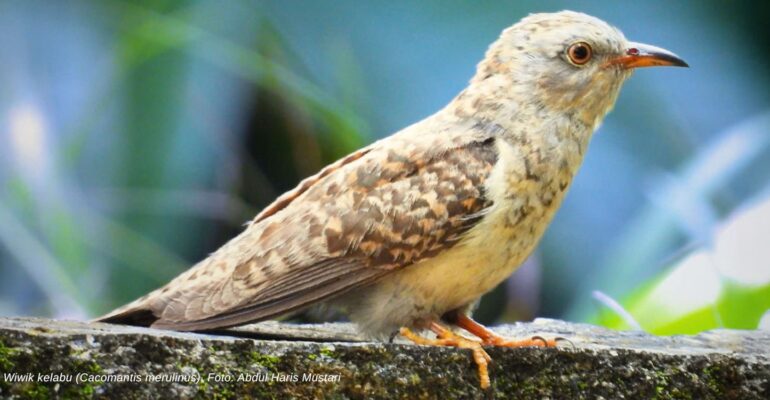
IPB University is known as a biodiversity campus with significantly high bird diversity. Various bird species can be found in several locations on this green campus, one of which is the plaintive cuckoo (Cacomantis merulinus).
A lecturer from the Department of Conservation of Forest and Ecotourism, Dr Yeni A Mulyani, explained that the plaintive cuckoo is a unique bird. This bird, which belongs to the Cuculidae family, does not build its own nest to lay eggs, but instead lays its eggs in the nests of other birds (brood parasitism).
“The plaintive cuckoo allows other parent birds incubate and care for its young until they are independent. This is behavior rarely seen in other birds, which usually build nests, incubate their eggs, and care for their own young,” said the lecturer, an expert in bird ecology and conservation, (10/9).
One interesting thing is that the plaintive cuckoo is rarely seen, but its call is often heard. Its distinctive call has given rise to a myth among the community, which considers it a sign of death. “A myth is just a myth, it’s not actually like that,” she emphasized.
Dr Yeni stated that the high biodiversity makes the IPB Dramaga Campus a home for the plaintive cuckoo. There are 13 territories spread across various campus areas, including the Cikabayan Educational Garden and the arboretum area.
Based on the results of joint research with her student, Yaumud Raiyardhi, the most encounters with plaintive cuckoos were at the Women’s Dormitory and the IPB University Gymnasium, which are classified as residential habitat types. The second most were around Lake LSI, which belongs to wetland edge habitat. The third most were in the rubber stands located between the Lecturer Housing and the Lake SDGs.
“Plaintive cuckoos prefer places that provide food sources for them, such as insects. Therefore, their presence is very dependent on an environment that has many insects, whether in yards, forest edges, or gardens,” she said.
The presence of the plaintive cuckoo at IPB Dramaga shows this campus is an ideal place for birds like the plaintive cuckoo to survive. With land clearing outside the campus reducing bird habitat, the campus becomes a refuge for various types of birds, including the plaintive cuckoo, which seek safe places to nest.
However, Dr Yeni revealed the challenges in preserving birds on campus. She highlighted the importance of preserving natural habitats and minimizing disturbances to the birds. Although IPB University has made efforts to preserve most of the land by keeping it open, human disturbances such as bird trapping remain a problem.
“In order to preserve the existence of gray-headed swallows and other birds on the IPB Dramaga Campus, it is necessary to involve the community around the campus in conservation efforts. IPB University must intensively disseminate information about the importance of preserving biodiversity, prohibiting bird capture, and maintaining natural habitats,” she concluded. (MHT)