
Synergy Between IPB University and UNDP Strengthens Ecosystem-Based Climate Action in Wakatobi
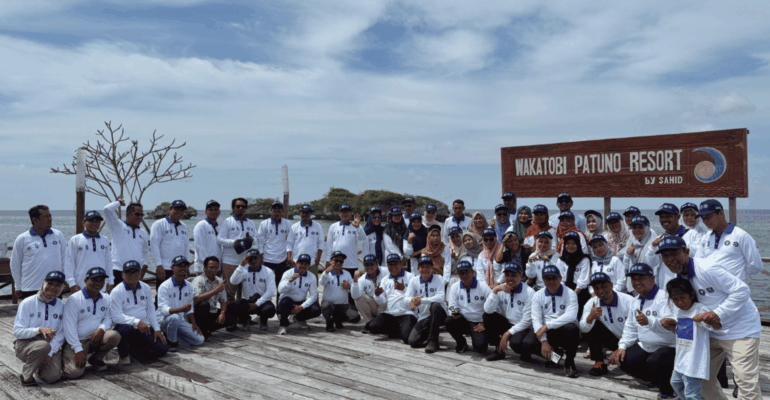
The consortium of the Center for Coastal and Marine Resources Studies (PKSPL) and the Center for Climate Risk and Opportunity Management in Southeast Asia and the Pacific (CCROM-SEAP) IPB University organized a training and technical guidance (bimtek) activity for the Climate Village Program (ProKlim).
This activity, supported by the United Nations Development Programme (UNDP) Indonesia, was held in the context of formulating an ecosystem, landscape, gender equality, and social inclusion-based Climate Change Adaptation Plan in Wakatobi Regency, Southeast Sulawesi.
The training entitled “Second Training in Formulation of Ecosystem and Landscape-based Adaptation Plan including Baseline and Target Setting” aimed to increase the capacity of the Integrated Working Team for Climate Change Adaptation of Wakatobi Regency, particularly in knowledge of methods, techniques, and strategies for formulating regional adaptation action plans.
“The output of this program is also expected to produce identification and mapping of potential hazards, vulnerabilities, risks, and indications of climate change impacts based on accurate field data, to support the formulation of adaptation action plans in Wakatobi Regency,” said the Chairman of PKSPL IPB University, Prof Yonvitner.
Haryanti Sunatra, National Project Coordinator for Direct Project UNDP Indonesia, expressed her commitment to continuously support the Government of Indonesia in efforts to address climate change challenges.
“Through close collaboration with the Ministry of Environment, as well as support from the Ministry of Finance, the Ministry of Home Affairs, and IPB, we strive to improve assessment methodologies and strengthen the SIDIK system (Vulnerability Index Data Information System), as well as develop climate change adaptation plans that can be implemented both at the national and regional levels,” she said.
In this process, UNDP also emphasized the importance of integrating the principle of gender equality and ensuring the active participation of vulnerable groups so that the benefits of the adaptation plan are truly felt at the grassroots level. Therefore, together with government partners, they plan to implement a pilot project in Wakatobi, which is expected to become an example of good practice in the implementation of ecosystem and landscape-based adaptation plans.
Through this activity, it is expected to realize an inclusive, data-based climate change adaptation action plan oriented toward environmental sustainability and community welfare.
Arief Fibriyanto, SSos, MSi, representative of the Ministry of Home Affairs, also emphasized the importance of strengthening governance and institutions. Arief also highlighted the need for alignment between central and regional planning while taking into account their respective authorities. He said this is to ensure that the data, targets, objectives, goals, strategies, policies, and development plans prepared by local governments can be effectively implemented.
The Regional Secretary of Wakatobi Regency, Nadar, SIP, MSi, representing the Regent, affirmed that ecologically, Wakatobi is the center of the Coral Triangle, known as the “Amazon of the Seas.”
Nadar continued that Wakatobi is also traversed by the Indonesian Throughflow (Arlindo), which plays an important role in the distribution of marine larvae, making it a main spawning location with a high abundance of larvae.
“With this natural destiny, Wakatobi has a strategic position as one of the most important marine areas in the world, contributing to global conservation as well as marine food security,” stated Nadar. (*/Rz)(IAAS/RSL)

