Strengthening the Culture of Employee Discipline, Here’s the Message of the Vice Rector of IPB University
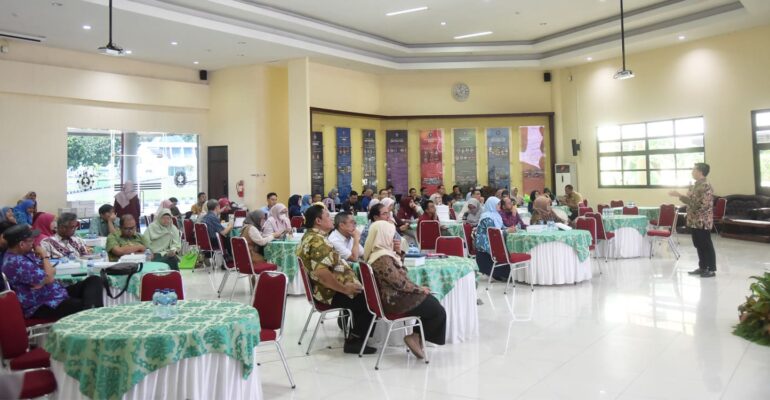
In an effort to build a culture of discipline and professionalism, IPB University through the Directorate of Human Resources (HR) organized a Workshop on Employee Discipline Development and Enforcement. The activity took place at IPB Dramaga Campus, Bogor (10/14).
Vice Rector of IPB University for Resource Resilience and Infrastructure, Dr Alim Setiawan Slamet emphasized discipline as one of the main keys in building a strong organization and integrity.
“If the organization has strong discipline, then the transformation will go well. IPB is large, with more than four thousand employees. It is not easy to maintain an orderly system. With consistent discipline, everything can go well,” he said.
Dr Alim also reminded that every unit leader has the responsibility to conduct coaching, supervision, and discipline enforcement to the employees under him.
“If an employee is suspected of violating discipline, the superior is obliged to conduct an examination. If it is not done, the supervisor can get heavier sanctions,” he explained.
In addition, he also emphasized the importance of administrative accuracy and compliance with procedures in every disciplinary enforcement process. This, he said, was important to avoid administrative errors that could lead to legal consequences.
Meanwhile, the Director of Human Resources of IPB University, Dr Heti Mulyati, explained that this activity was held as a form of preventive measure so that the leaders comprehensively understood the rules of employee discipline, both for civil servants (PNS), permanent non-civil servants, and contract employees.
“We want the leaders to understand the rules and procedures of disciplinary guidance, so that problems in the work unit can be handled directly without having to always wait for follow-up from the HR Directorate,” she explained.
She cited various cases that often arise in the work environment, such as unauthorized absences, unreported marriage or divorce administration issues, and violations of the code of ethics.
“Leaders must know the channels. Summoning employees cannot be done via WhatsApp or telephone, but using an official format according to the provisions,” she emphasized.
Through this activity, the leaders of faculties and schools are expected to strengthen the culture of discipline in their respective units, while increasing productivity, professionalism, and a sense of family in the work environment of IPB University.
“We want to build a healthy, productive, and integrity work environment. Because discipline is not just an administrative obligation, but an important foundation for creating a strong organization,” concluded Dr Heti. (IAAS/LAN)