Pros and Cons of the Parung Panjang Mine Closure: Insights from an IPB University Sociologist
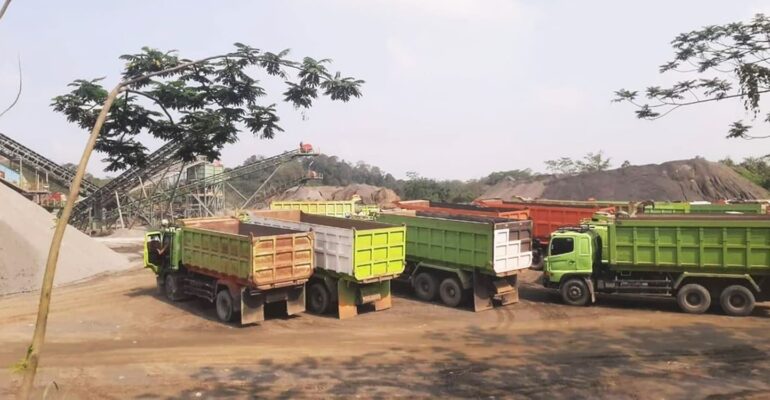
The temporary suspension of mining activities in Parung Panjang, Bogor Regency, by the Governor of West Java, Dedi Mulyadi, has generated complex social and economic impacts on the local community.
On one hand, public spaces have become calmer, while environmental quality and public order have improved. On the other hand, thousands of residents who rely on mining activities for their livelihoods are now facing severe income disruptions.
Responding to this situation, IPB University sociologist Dr Ivanovich Agusta stated that this policy has triggered a reconfiguration of local socio-ecological and economic relations.
“Sociologically, the mine closure is an effective intervention to ensure public safety and order. However, it also reveals the extent of the local economy’s dependence on C-mining logistics and the weakness of compliance with previous regulations,” he said.
According to him, residents living along the mining corridor have long suffered environmental victimization, such as exposure to dust, accidents, and road damage. Yet, a social dilemma has now emerged: between the interests of public safety and quality of life, versus the needs of those whose livelihoods depend on mining.
“Improved environmental conditions have increased residents’ subjective well-being. However, this does not immediately eliminate the psychosocial burden faced by families who have lost their sources of income,” Dr Ivanovich explained.
As the gap widens between those involved in mining and those who are not, Parung Panjang’s social dynamics are marked by growing polarization. Some residents support the closure for safety reasons, while mining workers demand concrete solutions for their lost income.
“This pro-and-con pattern reflects the tension between economic beneficiaries of the mining sector and those affected by its externalities. The conflict may escalate if there is no clear mechanism for compensation and mediation,” Dr Ivanovich added.
To address this social dilemma, Dr Ivanovich recommended adopting a socio-economic valuation perspective toward mining externalities. He emphasized that transitional policies should include fair compensation to prevent the burden from falling on the most vulnerable households.
“An effective strategic step would be a dual-policy package: emergency social protection for affected groups, targeted livelihood transition programs, stricter regulation of mining trucks, and the construction of dedicated mining roads to ensure public safety,” he stated.
Additionally, he proposed short-term labor-intensive programs in public facilities, wage subsidies for truck drivers and loaders, as well as reskilling and upskilling training for micro, small, and medium enterprises (MSMEs) to mitigate short-term economic shocks.
“The willingness to accept (WTA) approach, based on IPB University’s study on mining externalities in Rumpin, can also serve as a reference for determining fairer compensation,” he added.
Furthermore, the enforcement of Regent Regulation (Perbup) No. 56/2023 on restricting mining truck operating hours should be strengthened through 24 hour monitoring systems, gate installations at vulnerable points, and progressive sanctions for violators.
“Consistent law enforcement is key to rebuilding public trust in mining governance,” he asserted.
Looking ahead, Dr Ivanovich suggested the construction of a dedicated mining route as a medium-term structural solution to separate logistics traffic from public roads. He also emphasized the need for a community mediation forum bringing together residents, business actors, and the government to agree on a transparent economic transition roadmap and compensation mechanism.
“Through open public communication, rapid data collection, and a firm commitment to building a dedicated mining route, social tensions can be reduced, and public trust in government policy can be restored,” he concluded. (AS)(IAAS/HAP)