More than 100 Butterfly Species Inhabit IPB University Campus, Experts Say: Indicator of a Healthy and Beautiful Ecosystem
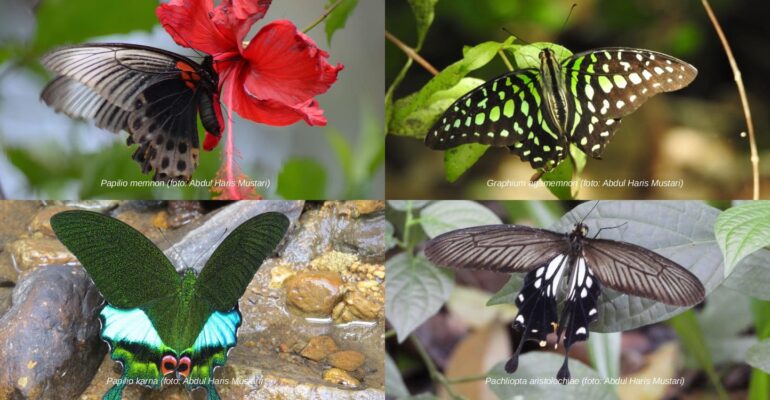
Biodiversity on the IPB Dramaga campus has been reconfirmed by the latest findings: as of 2025, there are 128 recorded butterfly species.
This data shows that the IPB University campus area not only functions as a center for education and research, but also as a primary habitat for pollinating animals and an indicator of ecosystem health.
Some of the butterfly species include Graphium agamemnon, Graphium sarpedon, Losaria coon, Pachliopta aristolochiae, Papilio demoleus, and Papilio memnon.
Dr Abdul Haris Mustari, a lecturer in Forest Resource Conservation and Ecotourism (KSHE) at IPB University, explained that each butterfly species requires specific host plants for feeding and laying eggs (plant specific).
“Therefore, butterfly diversity is greatly influenced by plant diversity in a given area,” he explained.
Furthermore, he mentioned that butterflies generally prefer plants from the citrus family (Rutaceae). However, other plants such as hibiscus, soka, tembelekan, pacing, harendong, frangipani, jasmine, butterfly flower, calliandra, bungur, and jacaranda are also favorites of various types of butterflies.
“The key to increasing butterfly diversity is to increase the number of flowering plants that they like,” added Dr Mustari.
According to him, the abundance of butterflies indicates a healthy ecosystem and high plant biodiversity. The IPB University campus has various types of habitats with a variety of food plants, so this area is inhabited by large numbers of butterflies.
“The green and beautiful campus environment supports the butterfly life cycle, even though most only last a few days to a few weeks. Some species, such as birdwing butterflies (Ornithoptera), can live for 2-3 months,” he said.
Another interesting phenomenon is the presence of butterfly species that are sometimes considered extinct but reappear in certain years. According to Dr Mustari, this is greatly influenced by the availability of food plants. If food sources decrease, butterfly populations decline or even disappear temporarily, then return when environmental conditions are favorable.
“Butterflies are indicators of environmental health. The more diverse the types of butterflies found, the healthier the ecosystem that supports them,” said Dr Mustari.
He added that the existence of 128 species of butterflies at IPB University is clear evidence that the campus has rich plant biodiversity, while maintaining its ecological function as a sustainable green area. (dr) (IAAS/RWA)