IPB University Students Study Elderly Accessibility to Digital Public Services in Bogor City
Older adults often face difficulties when adapting to digital services in today’s smart city era. However, with the aging population on the rise, their access to public services, especially healthcare, has become an increasingly urgent need.
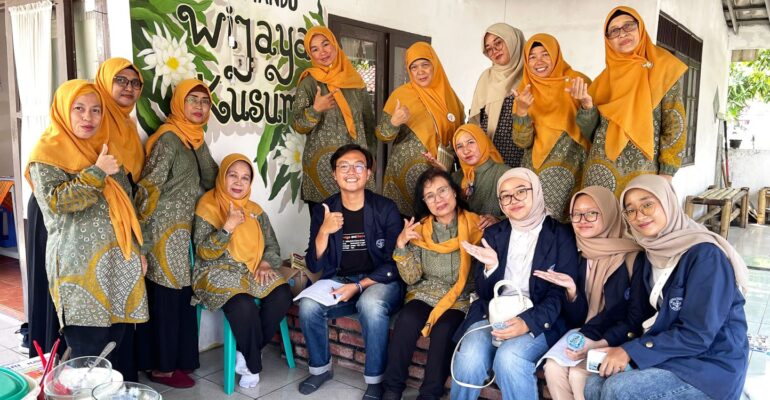
To address this issue, students at IPB University conducted research on the accessibility of digital public services for the elderly in the city of Bogor. This research was initiated through the Student Creativity Program in the field of Social Humanities Research (PKM-RSH) entitled “Silver Surfing in the Digital Wave: Transformation of Behavior and Digital Adaptation of the Elderly in Accessing Smart City Public Services in the City of Bogor.”
Team leader Fadhila Bunga Ambary from the Department of Management, Faculty of Economics and Management, IPB University, explained that their research focuses on the elderly as one of the vulnerable groups that rarely receive attention in the digitalization process.
“This PKM focuses on vulnerable groups that are rarely considered in the digitization process, namely the elderly. We use the Technology Acceptance Model (TAM) approach, which provides a comprehensive analysis of technology acceptance factors and links them directly to digital-based health services,” she said.
Fadhila added that this study aims to identify patterns of behavioral transformation among the elderly in utilizing digital public services, discover factors that influence their adaptation through the TAM framework, and develop policy recommendations that support elderly-friendly digitalization.
“In this study, Silver Surfing in Digital Wave is defined as the phenomenon of the elderly trying to navigate the wave of digital transformation by utilizing technology to meet their daily needs, especially in accessing public services in the era of smart cities,” added Fadhila.
This theme was chosen because the development of smart cities in Indonesia, including in the city of Bogor, increasingly demands digital-based public services. Meanwhile, the elderly still face barriers to technological adaptation.
“With the number of elderly people continuing to increase, the digital divide has become a serious problem that has the potential to reduce their access to important services, especially health services,” she explained.
The research, which also involved Silmi Aulia Syahadah and Muhammad Irgi Prayudha Kusairi, under the guidance of lecturer Rindang Matoati, SE, MSc, produced outputs in the form of progress reports, final reports, scientific articles, policy briefs, and popular publications on social media.
The research findings are expected to provide concrete input for the Bogor City Government in designing inclusive digital public services. Thus, this research is not merely an academic study but also a tangible contribution from the younger generation in bridging the digital divide across generations and ensuring the inclusivity of smart city development in Indonesia. (dh) (IAAS/NVA)