
IPB University Entomologist: The Bantul Stinging Incident Was Not Caused by Vespa Wasps, but by Deadly Giant Honey Bees
The recent death of an elderly woman in Bantul, allegedly due to an attack by a swarm of “vespa wasps,” has drawn significant public attention. In response, Prof Tri Atmowidi, an entomology expert from IPB University, clarified the misinformation and provided public education on how to properly handle insect sting incidents.
Not Vespa Wasps
According to Prof Tri, the term “tawon gung” commonly used by the public generally refers to the species Vespa affinis or Vespa velutina. Both belong to the order Spheciformes and are characterized by their slender bodies, dark brown coloration, and distinctive abdominal stripes.
“In general, wasps have fewer body hairs compared to bees and tend to be more aggressive,” he explained.
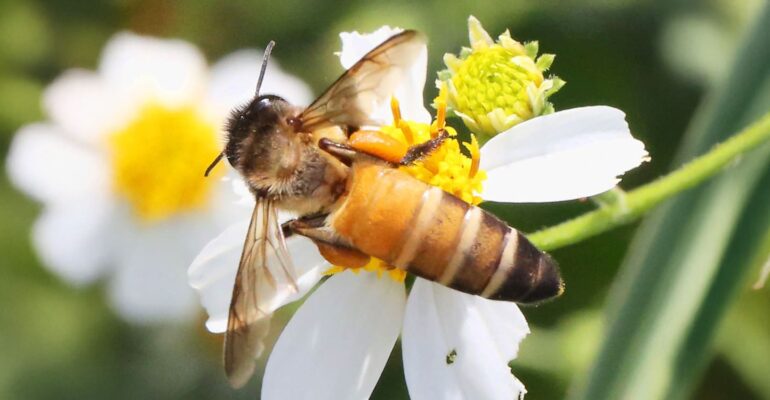
However, based on the photographs circulating in the media, Prof Tri suspects that the Bantul incident was not caused by wasps, but rather by giant honey bees (Apis dorsata).
“From the structure of the nest, it seems that it wasn’t a wasp nest, but a large bee hive consisting of a single, large comb usually hanging from tall tree branches,” he said.
He added that this species of forest honey bee has a body length of about 17–20 millimeters, brown in color with yellowish-brown abdominal stripes. The species is known for its highly defensive behavior and cannot be domesticated due to its frequent migratory nature.
“In the Bantul case, the victim was likely stung by dozens of Apis dorsata bees. Although a single bee can only sting once, multiple stings can inject enough venom to cause serious toxic effects, potentially leading to death,” he explained.
Wasps are generally considered more dangerous than bees because they can sting repeatedly without losing their stingers. Bees, on the other hand, can sting only once, as their stingers remain embedded in the victim’s skin.
“Bee venom is produced in larger quantities, but wasp venom (particularly from Vespa species) has a stronger toxic potency,” he added.
Both wasp and bee stings can trigger severe allergic reactions or even death, especially in individuals with hypersensitivity or those who suffer multiple stings. Bee venom, known as apitoxin, contains a variety of bioactive compounds, including proteins, peptides, and biogenic amines such as histamine, dopamine, melittin, and phospholipase.
“Localized reactions include pain, heat, swelling, and itching at the sting site. Meanwhile, systemic or anaphylactic reactions may cause more severe symptoms such as skin redness, swelling of the lips and eyelids, shortness of breath, or even fainting,” Prof Tri elaborated.
When multiple stings occur, the venom can damage vital organs such as the liver and kidneys, requiring emergency medical treatment.
First Aid Measures
Prof Tri reminded the public that the first step after being stung by a bee or wasp is to move away from the nest area to avoid further attacks. If the sting is from a bee, immediately remove the stinger from the skin, wash the area with soapy water, and apply a cold compress.
“Take an antihistamine to reduce allergic reactions. If the victim experiences shortness of breath or faints, seek medical help immediately,” he advised.
As a preventive measure, the public is urged not to panic and avoid trying to remove bee or wasp nests on their own. If a nest is found near residential areas, it should be reported to the local fire department or professional pest control authorities.
“Avoid sudden movements or loud noises near nests, as these can trigger mass attacks. Simply place a warning sign and move away calmly,” he concluded. (AS)(IAAS/HAP)

