
IPB University Campus Forest Park, Biodiversity-Based Educational Tourism Destination
Amidst the increasing demand for green open spaces (RTH) and educational destinations, IPB University presents the Campus Forest Park as a place for learning and healing.
Located on Jalan Lengkeng, IPB Dramaga campus, the Campus Forest Park serves as a center for conservation and environmental education accessible to both students and the general public.
According to Resti Meilani, MSi, a lecturer at the Department of Forest Resource Conservation and Ecotourism (KSHE) at IPB University, “The Campus Forest Park is a vital facility for conservation practices, research, and environmental education.”
The Campus Forest Park was established based on IPB Rector’s Decree No. 086 of 1995, which designated this area as an ex situ conservation area as well as an effort to promote reforestation, air quality management, water management, and soil management at the IPB Dramaga campus.
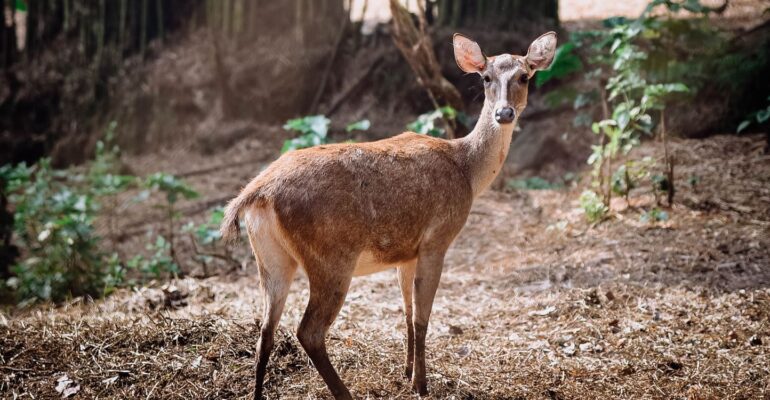
One of the attractions of the Campus Forest Park is the deer breeding and peacock enclosure, which are easily observed by visitors, especially school children. In addition, students from the Faculty of Forestry and Environment (Fahutan) can act as nature interpreters, helping visitors understand the message of conservation.
The vegetation in this park is still well preserved with cool air, and is inhabited by 39 species of animals from the mammal, herpetofauna, and aves groups. The presence of the Ciapus River nearby adds to the appeal of this area as an environmental education destination.
“The main potential of the Campus Forest Park lies in biodiversity-based educational tourism, which aims to provide visitors with an understanding of the importance of preserving biological diversity,” said Resti.
This concept, she said, is known as biodiversity-edu tourism, which integrates conservation education with direct experiences in nature.
In the future, IPB University plans to develop this area as a non-commercial recreational space. This development is expected to meet the community’s need for refreshment and healing, while also supporting the preservation of natural resources.
“The biggest challenge is managing the number of visitors so as not to damage the environment and ensuring that the carrying capacity of the area is maintained,” said Resti. To that end, interpretive media such as information boards, booklets, and other media are used to convey education about natural resources.
The development of educational tourism also involves the community and students, namely by designing the layout of the park and establishing cooperation with schools as the main target of educational tourists. This also supports the school’s co-curricular curriculum, strengthening the role of IPB University in educating the community to protect the campus environment.
“The long-term benefits of sustainable educational tourism management include increased awareness and positive behavior toward biodiversity, while reinforcing IPB University’s identity as a biodiversity campus that supports the Sustainable Development Goals (SDGs),” explained Resti. (MW)(IAAS/RWA)

