
Biodiversity at IPB University Campus, a Natural Laboratory with 350 Plant Species
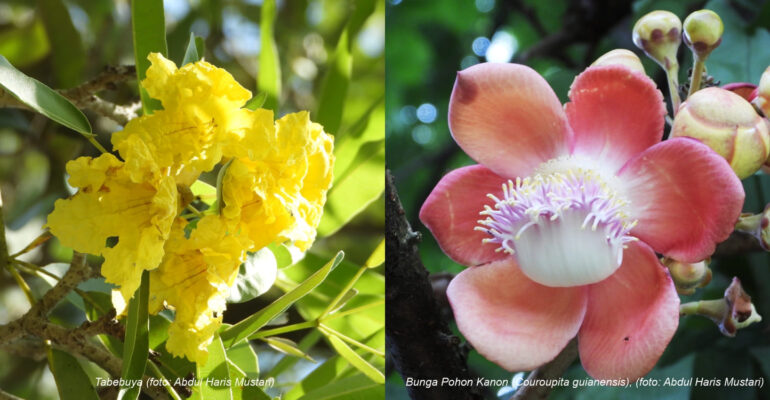
The IPB University campus in Dramaga, Bogor, is not only known as a center for higher education in agriculture, but also as home to 350 plant species, including rare and endemic Indonesian plants.
According to Dr Abdul Haris Mustari, a lecturer in Forest Resource Conservation and Ecotourism (KSHE) at IPB University, this rich biodiversity reflects the campus’s function as a natural laboratory that maintains ecosystem balance.
The IPB University campus is located about ten kilometers west of Bogor City and has a unique landscape. This area has a combination of flat land, valleys, lakes, swamps, and rivers.
According to Dr Mustari, the diverse types of habitats on campus, such as the arboretum, campus forest park, bamboo groves, grasslands, and experimental gardens, support the life of various types of plants and animals.
“The cool campus environment and clean air can be enjoyed thanks to the presence of healthy plants. Plants are the most important component of habitat diversity,” said Dr Mustari.
He explained that plants not only provide oxygen, but also food, breeding grounds, and shelter for animals.
The presence of plants enriches soil quality through litter, decaying roots, and a sustainable nutrient cycle. Plant root systems also improve soil aeration and support soil organism activity.
“The relationship between plants and animals is mutualistic, mutually beneficial and interdependent,” added Dr Mustari.
Furthermore, dense vegetation cover on campus creates a year-round source of spring water, which is beneficial not only for humans but also for all organisms. The vegetation growing on campus also creates a cool and comfortable microclimate.
Currently, IPB University has recorded at least 350 plant species of various growth levels, ranging from trees, shrubs, bushes, herbs, to vines and palms. In addition, there are also cultivated medicinal plants and a collection of 40 types of bamboo.
Several rare and endemic Indonesian plants can also be found on campus, including ulin (Eusideroxylon zwageri), ebony (Diospyros celebica), kayu kuku (Pericopsis mooniana), and around 20 species of Dipterocarpaceae such as Shorea and Dipterocarpus. Other species such as rasamala (Altingia excelsa), saninten (Castanopsis spp.), and puspa (Schima wallichii) also contribute to this biodiversity.
Not only local species, plants from abroad also adorn the campus environment, including the cannon tree (Couroupita guianensis), sausage tree (Kigelia africana), Venezuelan rose (Brownea grandiceps), and tabebuya with various colors.
A collection of more than 120 types of medicinal plants is stored at the IPB University’s Tropical Bioactive Compounds Research Center (Trop BRC), including sanrego, yellow root, dewandaru, and tabat barito.
Dr Abdul Haris Mustari emphasized that the existence of plant biodiversity on the IPB University campus is a valuable asset.
“This campus is a concrete example of how an educational area can also serve as a conservation center. The biodiversity here not only supports research but also constitutes an ecological heritage that must be preserved for the future,” he stated. (dr) (IAAS/LAN)

