
Singapore Bans Vaping, IPB University Experts Warn of Serious Dangers of Electronic Cigarette Use
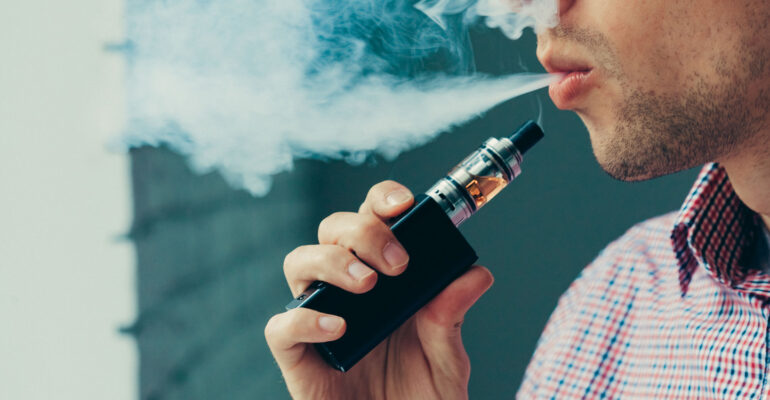
The Singaporean government has officially banned the use of electronic cigarettes or vapes. In fact, with the increase in cases of abuse and adverse effects on public health, vapes have been categorized as equivalent to drugs.
In response to this, dr Yusuf Ryadi, MKM, a lecturer at the Faculty of Medicine at IPB University, emphasized that vapes do pose many health risks and are even more dangerous than conventional cigarettes in some aspects.
“Although often seen as a safer alternative to cigarettes, vaping contains various harmful substances such as nicotine, organic solvents, and flavor additives, which can trigger inflammatory reactions in the body,” explained dr Yusuf in a written interview with IPB Today (9/8).
He added that research indicates vaping increases the risk of respiratory disorders and cardiovascular diseases. Nicotine, the primary addictive substance, is highly prone to causing dependence, particularly among adolescents and young adults who are still in the brain development phase.
“Exposure to nicotine can disrupt dopamine circuits, reducing memory capacity, attention, and emotional control,” he said.
Furthermore, dr Yusuf explained that the decomposition of vape liquids can produce carcinogenic compounds such as formaldehyde, acetaldehyde, and acrolein, which have the potential to damage DNA and trigger cancer cell growth. Fine particles in vape aerosols can also enter the alveoli of the lungs and cause serious inflammation.
Not only that, vape vapor has also been found to contain heavy metals such as nickel, cadmium, and lead. “These substances can trigger blood vessel constriction, hypertension, and heart rhythm disorders,” he added.
Five Health Effects of Vaping
dr Yusuf grouped the health effects of vaping into five main categories.
1. Respiratory disorders such as chronic bronchitis, bronchiolitis obliterans, and asthma.
2. Cardiovascular diseases, including hypertension, arrhythmia, and coronary heart disease. 3. Cancer. Increased risk of lung cancer and upper gastrointestinal tract cancer.
4. Peripheral vascular disorders such as peripheral artery disease and ischemic ulcers, and 5. Oral health, including enamel damage, gingivitis, and periodontal disease.
dr Yusuf said that the effects of vaping can be felt over varying periods of time. Within minutes, users may experience an increase in heart rate and blood pressure. Within a few days to weeks, symptoms such as dry cough and shortness of breath may appear. Meanwhile, in the long term (more than five years), the risk of cancer and heart disease increases significantly.
He also highlighted the Singapore government’s findings regarding the content of harmful substances in vape liquids. Of the 100 samples tested, one-third contained etomidate, an anesthetic that can impair consciousness and respiratory function. Therefore, Singapore treats vape possession as narcotics to prevent abuse.
“Vapes with high nicotine content, equivalent to 20 to 40 cigarettes in one pod, have a greater potential for addiction than regular cigarettes,” he explained.
Seeing the dangers lurking, he urged the government to take decisive action. Public appeals, scientific research, and legislative proposals are being promoted to regulate the distribution of vapes more strictly.
“The National Narcotics Agency is reviewing the status of vapes as prohibited items, and several members of the House of Representatives have also begun proposing regulatory changes,” said dr Yusuf.
Campus environments, he added, are also playing an active role by creating vape-free zones and promoting research and policy discussions to anticipate the long-term impacts on young people. (dh) (IAAS/KQA)

