Prof Abdjad Asih Nawangsih Provides Solution to Eradicate Plant Diseases with Bacteria, Proven to be Environmentally Friendly
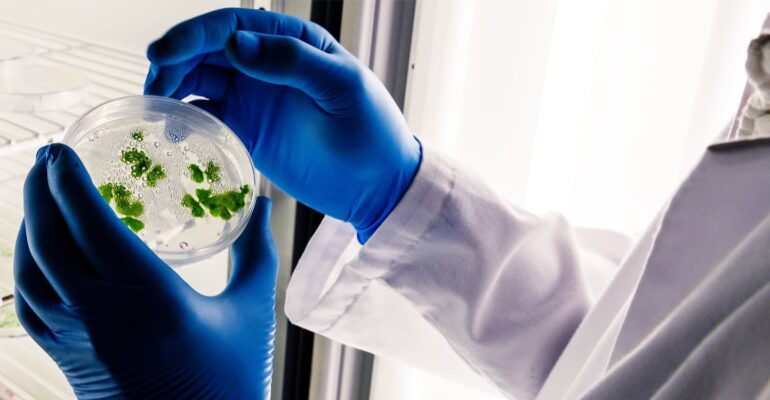
For farmers, plant diseases are often a nightmare because they can lead to crop failure. Instead of using synthetic chemical pesticides, there is an environmentally friendly solution that comes from bacteria: actinomycetes.
Actinomycetes, especially the Streptomyces genus, are one of the bacterial groups with high potential as biological control agents for plant diseases. This was conveyed by Professor of Plant Protection at IPB University, Prof Abdjad Asih Nawangsih, during the IPB University Professor Scientific Pre-Lecture Press Conference held online (9/19).
“Laboratory tests show that the effectiveness of actinomycetes in inhibiting plant disease-causing microorganisms can reach 76 percent,” said Prof Abdjad.
Actinomycetes themselves are part of a group of organisms known as biological control agents (BCAs). Often referred to as biopesticides, BCAs originate from microorganisms, particularly bacteria, which function to suppress the development of plant pathogens.
“Some bacteria commonly used as biocontrol agents include Bacillus subtilis, B. amyloliquefaciens, B. megaterium, B. velezensis, Lactobacillus plantarum, Pantoea agglomerans, Pseudomonas fluorescens, and Agrobacterium radiobacter,” he explained.
He revealed that actinomycetes are not only capable of directly inhibiting pathogens through antibiosis mechanisms. They can also increase plant resistance through the biosynthesis of bioactive compounds.
According to him, antimicrobial activity, the production of enzymes such as cellulase, chitinase, and glucanase, as well as the synthesis of siderophores and phytohormones make actinomycetes a potential solution for sustainable agriculture.
Prof Abdjad added that studies on biological control of plant diseases are increasing along with growing public awareness of the importance of environmentally friendly and health-safe agriculture.
The global biopesticide market has also recorded significant growth. In 2024, its value reached USD 8,73 billion and is projected to increase to USD 28,61 billion in 2032, with a compound annual growth rate (CAGR) of 16 percent.
In Indonesia, although there is no definitive data on the number of farmers using biopesticides, several products are already available on the market. The main challenge, according to Prof Nawangsih, is to increase farmers’ education and trust in the effectiveness of biopesticides compared to synthetic chemical pesticides. (dh)(IAAS/LAN)