
Many People Mistake Leeches for Shell-less Snails, IPB University Lecturer Explains the Difference
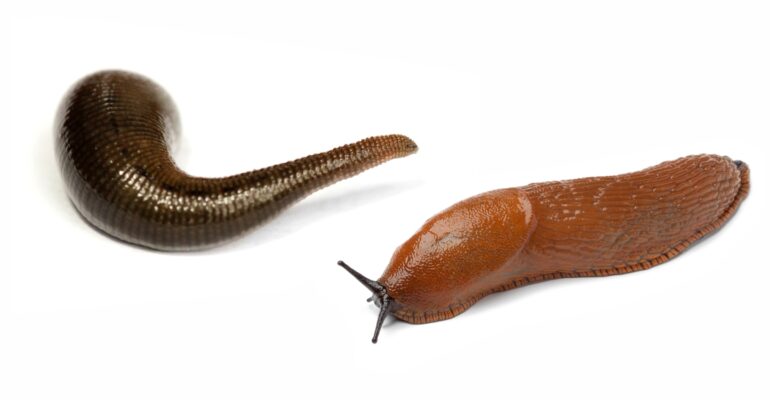
Have you ever seen a small, slimy, slug-like creature in your yard? Most people immediately chase it away, thinking it is a leech. In fact, it is a shell-less snail. It turns out that these two creatures, which look similar, live in completely different worlds.
Dr Windra Priawandiputra, a lecturer at the Department of Biology at IPB University, explains the differences between leeches and shell-less snails, which are often mistaken for similar animals. He emphasizes that although they appear similar at first glance, they have fundamental differences in taxonomy and morphology.
“Snails without shells are part of the Mollusca phylum, Gastropoda class, with soft bodies covered in thick mucus and tentacles on their heads. These animals move slowly using their abdominal feet and mucus,” said Dr Windra in a written interview with IPB Today Editorial, Thursday (8/28).
Meanwhile, leeches belong to the phylum Annelida, class Hirudinea. According to Dr Windra, leeches have segmented bodies and are equipped with suckers at the anterior and posterior ends of their bodies, and do not have tentacles on their heads.
“Leeches move by contracting their bodies and attaching themselves using suckers,” he added.
In terms of habitat, shell-less snails are commonly found in damp areas such as rocks, forests, and gardens. Leeches, on the other hand, can live in freshwater environments such as lakes, rivers, swamps, or on land in damp environments.
Dr Windra also explained the differences in their feeding patterns. Snails without shells are herbivorous or detritivorous, while leeches are parasitic on mammals or predators of small invertebrates.
Although often considered plant pests, snails without shells also play a role as decomposers of organic matter. On the other hand, leeches are known to be parasites of animals and humans, but they also have benefits in the medical field. (dh) (IAAS/NRA)

