Indonesian Shrimp Rejected by US, IPB University Lecturer: Cesium Contamination Not from Fishing Industry
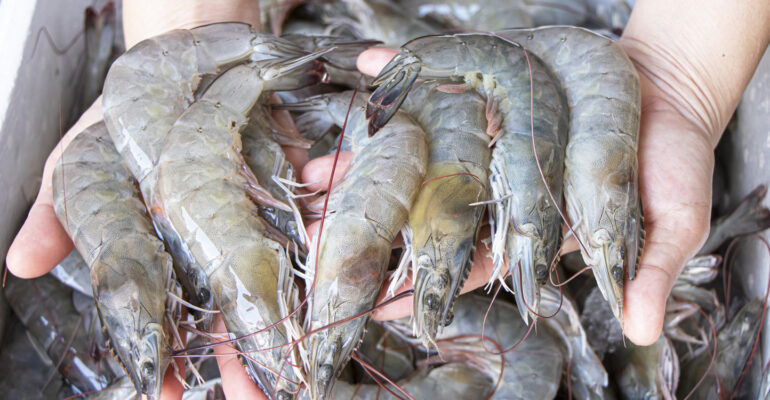
The recent rejection of frozen shrimp exports to the United States has raised public concerns regarding food safety. The US Food and Drug Administration (FDA) found radioactive cesium contamination in three batches of shrimp products from Indonesia.
In response, Dr Roni Nugraha, a lecturer at the Department of Aquatic Products Technology, Faculty of Fisheries and Marine Science (FPIK) IPB University, asserted that the contamination did not come from the production or processing of shrimp in fishing companies.
“This is actually not pollution from the fishing industry. Based on the investigation of the Nuclear Energy Supervisory Agency (Bapeten) and the Ministry of Maritime Affairs and Fisheries (KKP), this cesium is carried by the air from metal smelting activities around the location. So it is external, not from the shrimp processing system,” he explained.
Furthermore, Dr. Roni explained that the levels of cesium found were also far below the safe threshold set by the FDA. The FDA recorded levels of around 68 Bq/kg, while the safe limit is in the range of 1.200 Bq/kg.
“This means that technically it is still far from the dangerous level. But due to the precautionary principle, the FDA still asked for the product to be withdrawn from the market,” he said.
He emphasized that Indonesia’s fishery product export regulations are very strict. Companies are required to have a Certificate of Processing Feasibility (SKP) from the KKP, Health Certificate, and implement various international quality standards such as HACCP, BRCGS, and ISO.
“Fishery products are highly perishable and food-related, so the supervision is extra strict. Not all companies can export carelessly. All shrimp sent have passed the quality assurance system and food safety,” he said.
However, because cesium is not a common hazard in fishery products, routine detection of the substance is not carried out. “Unlike bacteria or common chemical contaminants that are always checked. Cesium is artificial radioactive, does not exist in the wild, so it is not included in the critical control point in the company’s SOP,” explained Dr Roni.
He thinks this case should be a momentum to strengthen the quality culture in the fisheries sector. Education to all stakeholders is very important so that food safety is a top priority.
“Indonesia has actually been good at implementing a food safety system for exported fishery products. However, this case shows the need for further investigation beyond the fisheries industry, for example into the scrap metal collection plant area that is suspected to be the source of cesium. This is to prevent similar cases from recurring,” he emphasized.
Furthermore, Dr Roni added that supervision from authorized institutions must also be more proactive, especially against potential external contamination that is not detected by industrial SOPs.
“Quality culture and food safety culture must continue to be promoted. This is important to maintain global trust in Indonesian fishery products,” he concluded. (US) (IAAS/LAN)