
Still Love Eating Noodles with Rice? IPB University Nutrition Lecturer Explains the Long-Term Risks
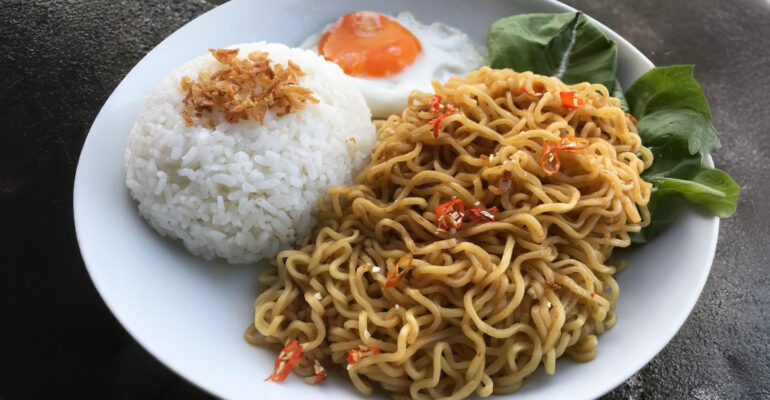
The combination of rice and noodles is still a favorite food for many Indonesians. Not only is it filling, but the taste sensation is also hard to forget.
However, Rosyda Dianah, SKM, MKM, a nutrition lecturer from the Vocational School of IPB University, warns of the long-term effects of this habit.
“This combination poses a risk of nutritional imbalance and various health issues if not balanced with other nutritional intakes,” explained the lecturer from the Food Service Industry Management and Nutrition Program at the Vocational School of IPB University.
According to her, combining these two carbohydrate sources can significantly increase calorie and carbohydrate intake while reducing the balance of other nutrients such as protein and healthy fats.
“If rice and noodles are consumed in equal amounts, carbohydrate content can dominate up to 80% of total energy intake, while protein and fat levels are very low,” she said.
In a calculation example, consuming 150 grams of rice and 100 grams of noodles results in approximately ±401 kcal of energy, approximately ±82 grams of carbohydrates, approximately ±7 grams of protein, and approximately ±2 grams of fat.
“This composition is unbalanced and far from the ‘My Plate’ concept, which aims for 50 percent vegetables and fruits, and the remaining 50 percent a combination of carbohydrates and protein,” she explained.
The My Plate concept is an update of the old guidelines ‘4 Healthy 5 Perfect’ and the Balanced Nutrition Guidelines. The purpose of this concept is to provide a simple and practical visual guide on healthy portion sizes, in line with Indonesian dietary habits.
Rosyda explained that consuming rice and noodles together over the long term carries the risk of triggering various metabolic disorders such as obesity, insulin resistance, dyslipidemia, and even chronic inflammation.
“The excess of simple carbohydrates from white rice and instant noodles can increase the glycemic index and accelerate blood sugar spikes. If not accompanied by sufficient protein and fiber intake, the effects can be long-term,” she explained.
She also added that insufficient intake of protein and healthy fats can lead to low levels of appetite-regulating hormones such as leptin and peptide YY. As a result, repeated feelings of hunger can lead to overeating, particularly from simple carbohydrate sources.
To avoid these risks, Rosyda suggested several alternative menus that remain filling without piling on carbohydrates, such as a combination of half a portion of rice with side dishes (animal and plant-based) and vegetables; boiled sweet potatoes with animal protein sources (e.g., eggs), plant-based protein (e.g., legumes), and vegetables; or low-carbohydrate menus like shirataki noodles with protein sources plus vegetables.
“The principle is to balance your plate according to the Isi Piringku guidelines. Ensure that carbohydrates do not exceed a quarter of the plate and complement them with protein, healthy fats, and fiber from vegetables and fruits,” she said. (Dr)(IAAS/KDP)

