Prof Eka Intan Provides Advice on Overcoming Mounting Waste in Landfills through Circular Economy
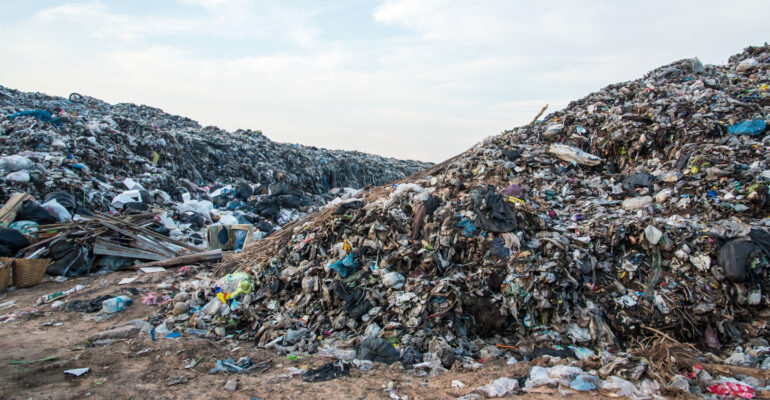
An ecological crisis is sweeping the world. It is triggered by climate change, pollution, environmental degradation, and resource scarcity.
According to Professor of Economics and Environmental Science at the Faculty of Economics and Management, IPB University, Prof Eka Intan Kumala Putri, the concept of circular economy emerges as a solution to the failures of the linear economic system that has long dominated development.
“The economy is highly dependent on environmental resources. The World Bank estimates that ecosystem collapse could result in losses of up to 2,7 trillion US dollars per year,” she stated during the Pre-Lecture Press Conference for IPB University Professors via Zoom Meeting (8/14).
Therefore, Prof Eka Intan said that the circular economy has a strategic role globally, with the main principles of extending product life and increasing material value.
According to her, developed countries have optimally utilized the bioeconomy in the implementation of the circular economy. In Indonesia, in 2023, the volume of domestic waste will reach 68,5 million tons.
The circular economy, she explained, can be a solution through the establishment of waste banks, banning single-use plastics, providing incentives for the recycling industry, and sorting waste to convert residues into valuable resources.
“In fact, out of the total two billion tons of solid waste generated worldwide each year, only 19 percent can be recycled. Meanwhile, the dominance of fossil fuels, which accounts for 70 percent of energy use, exacerbates the climate crisis. The Ministry of Environment and Forestry reports that out of the 68,5 million tons of waste in Indonesia, only 7,8 percent has been successfully recycled,” she explained.
She explained that cross-sectoral integration in circular economy policies in Indonesia can legitimize the environment as a force for development that is not only an ecological response but also promotes resource efficiency and industrial transformation toward an inclusive and competitive green economy.
However, Prof Eka noted that the implementation of a circular economy in Indonesia still faces several challenges, such as limited human resource readiness, inadequate recycling infrastructure, underdeveloped waste product markets, and weak cross-sectoral coordination.
“Currently, many cities in Indonesia are experiencing a waste management crisis, with some final disposal sites (TPA) already nearing capacity. Within the framework of a circular economy, policies that need to be implemented include reinforcing the legitimacy of waste segregation starting from the neighborhood level, business units, and offices,” she explained.
Prof Eka added that local governments need to establish Regional Regulations (Perda) that mandate waste sorting, not just voluntary1. This process must be carried out in an integrated and comprehensive manner, covering management from upstream to downstream.
“This policy is crucial to ensure that the circular economy transformation not only manages waste more effectively but also strengthens the legitimacy of the environment as a strategic resource for inclusive and sustainable national development,” she concluded. (Lp)