
IPB University Professor: Lerak Fruit Extract Effectively Reduces Methane Emissions and Increases Livestock Weight
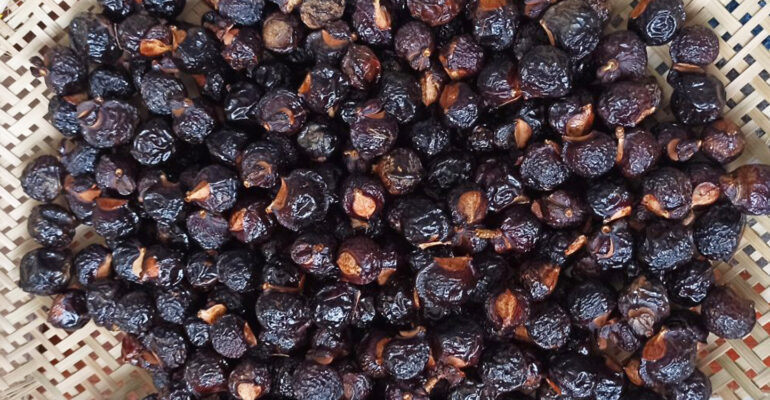
A livestock nutrition expert from IPB University, Prof Sri Suharti, revealed that lerak fruit extract (Sapindus rarak) has been proven to increase daily weight gain by up to 12,5 percent while reducing methane gas emissions from cattle by 11 percent.
“Adding 200 mg of lerak extract per kilogram of livestock body weight can increase daily weight gain by 12,5 percent,” said Prof Sri.
Furthermore, Prof Sri stated that lerak extract has great potential for application in smallholder farms that still rely on forage as the main feed.
Under these conditions, partial defauflage is necessary. Defaulflage in high forage ration systems can protect fiber-degrading bacteria from protozoan predation, thereby improving digestive performance and livestock performance.
The lerak plant itself is known as a tropical plant that grows easily on marginal land. The availability of raw materials is considered promising, although processing requires special attention.
“The process of making flour and extracting lerak is quite challenging because the fruit is quite hard when dry due to its high sugar content,” she explained.
In addition to reducing emissions and increasing weight, lerak extract also provides additional health benefits for livestock. “Another health benefit of lerak extract is that it can stimulate the immune system due to its saponin content,” concluded Prof Sri.
This finding opens up opportunities for the development of natural feed additives that are not only environmentally friendly but also increase livestock productivity and support the sustainability of the livestock industry.
Prof Sri explained that methane emission reduction occurs through two main mechanisms. “Methane reduction with the administration of lerak extract containing saponin occurs through two mechanisms, namely a decrease in protozoa population and an increase in propionate production,” she explained.
She noted that protozoa serve as hosts for certain methanogenic bacteria. “Defaunation by lerak saponins inhibits the growth of methanogenic bacteria and alters bacterial composition and volatile fatty acid (VFA) profiles by increasing propionate levels,” she added.
Propionate is known as the main energy source and precursor for meat formation. This increase in propionate is considered effective in suppressing methane production because propionate and methane compete for hydrogen (H₂) in the rumen.
Methane emissions from the livestock sector, particularly from enteric fermentation in the rumen, are known to contribute significantly to climate change. Methane has a global warming potential 21 times greater than carbon dioxide (CO₂), and causes a loss of energy from livestock feed of 2-12 percent. Therefore, methane emission management is an important part of efforts to mitigate climate change and improve livestock production efficiency.
The effectiveness of lerak extract has been demonstrated through laboratory tests (in vitro) and direct tests on Peranakan Ongole cattle (in vivo). At a dose of 200 mg/kg body weight, this extract was found to increase propionate production and total VFA, key indicators of rumen fermentation efficiency. (Fj) (IAAS/LAN)

