Chili Plants Are “Ageless”? This Innovation From Faperta IPB University Makes Chilies Endlessly Fruitful
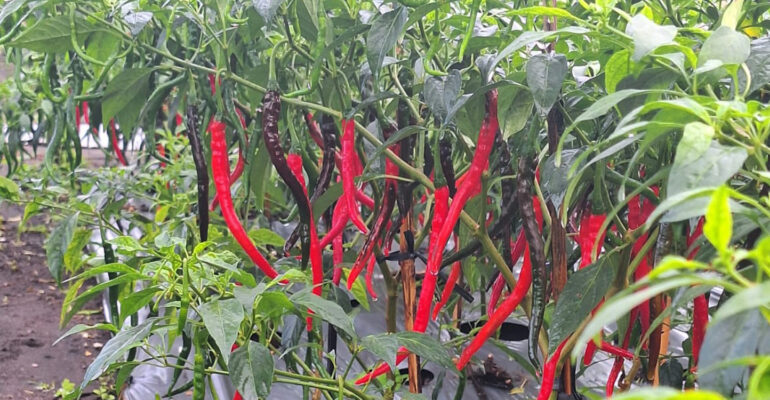
Who would have thought that chili plants could be “ageless” and continue to flower as if they knew no age. An innovation from the Faculty of Agriculture (Faperta) IPB University has proven it.
This micronutrient-based innovation enriched with Plant Growth Promoting Rhizobacteria (PGPR) bacteria makes the curly chili plants in Pleret Village, Panjatan District, Kulon Progo, look extraordinary, but bear more fruit, longer, and healthier.
Local farmer, Mr Gito was initially pessimistic. His chili plants seemed to be lagging behind those in the neighboring fields. However, everything changed after he applied this innovative micronutrient three times, starting at one month old.
The result? Surprising.
Mr Gito’s chili plants have now harvested four times, with a total average of 224 grams per tree – far exceeding the usual figure of around 153 grams per tree. Not only that, the visual appearance of the plants is also striking: the leaves are greener, the crown is fresh, and the plants continue to flower like young plants.
According to Prof Suryo Wiyono, Dean of Faperta IPB University who also accompanied the trial, the “Agless” effect is very promising. “This PGPR not only improves rooting and nutrient uptake, but also keeps growth hormones active,” he said.
He said that the application of micronutrients is enriched with special PGPR. The Agless effect is due to this special PGPR strain producing phytohormones, and also the enzyme ACC deaminase. “Plants look as if they are not aging, continue to flower and bear fruit,” he said.
The Professor of Plant Protection at IPB University said that the innovation is a new hope for chili farmers who often face the problem of decreasing productivity as the plants age.
“With this technology, it is not impossible that the productive life of plants can be extended and yields increased significantly without having to increase the land area,” he explained.
For both chili and rice crops, harvesting in the rainy season often causes damaged yields and reduced quality, so the success of the harvest is highly dependent on weather conditions. In an area like Gunung Kidul, which is known for its long dry season, this innovation could be an ideal solution-maximizing yields amidst the challenges of drought and extending the productive period of crops despite unfriendly weather. (*/Rz) (IAAS/NRA)