PKSPL IPB University and Pupuk Kaltim Increase Human Resource Capacity in the Coral Reef Excellent Center (CoE) Program
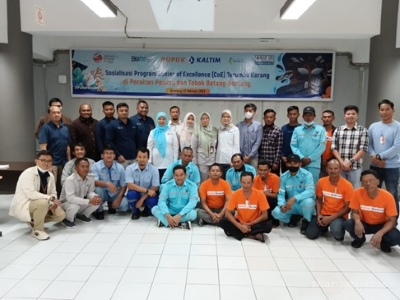
A total of 28 participants attended training on assessing the condition of coral reefs (27/2) at the PKT Learning Center, including representatives from the Kimasea, Karaka, Gusung and Malahing Island communities, as well as several staff from the Department of Environment, Research and General Affairs of PT Pupuk Kaltim (PKT).
Bait as the PKT representative said, since 2021 his party had initiated the Coral Reef Center of Excellence (CoE) program in collaboration with the Center for Coastal and Marine Resources Studies (PKSPL) IPB University. This Coral Reef CoE activity includes four integrated Scope of work (SOW).
“SOW1 is about assessing and mapping the condition of the health and diversity of coral reef ecosystems. SOW2 is related to Sea Garden otherwise known as Marine Park. “The purpose of this sea garden is to become a field laboratory and a place for learning coral ecosystems and marine education for various parties, including domestic and foreign campuses,” he said.
He continued, SOW3 is the development of a coral reef education center (ex situ conservation). SOW 4 deals with strengthening and involving coral reef communities.
In addition to training, socialization activities for the coral reef CoE program were also carried out. It is hoped that the community and coral reef groups will support and participate in this activity.
Meanwhile, Dr Yonvitner as head of PKSPL IPB university said, there are three objectives of SOW2, namely to provide healthy habitats, provide sufficient food sources for long-term life and as a form of anticipation in dealing with climate change. “Meanwhile, the socialization and training in assessing the condition of coral reefs is part of SOW4,” he said.
Isdahartati, MSi said, this training aims to increase participants’ knowledge about ecosystems, the functions and benefits of coral reefs and various activities that can damage coral reef ecosystems or other biota and their impacts.
“Participants also gain an understanding of issues and problems in managing coral reef ecosystems and provision of knowledge to assess the condition of coral reef ecosystems scientifically, starting from methods to data processing,” he said.
Novit Rikardi, MSi, as the person in charge of the training material and syllabus, said that participants will also gain knowledge regarding conservation strategies and various methods of assessing the condition of coral reef ecosystems.
“Later on the participants are expected to be able to process the data that has been collected from field practice activities in Pasilan waters which will be the location of the Sea Garden. After that, in groups they will present the results of the interpretation of the data,” he said.
The training was held using the andragogy method by delivering material in class for two days, field practice for one day and working groups to compile and process data from field practice. Then each group presented its project results. (*) (IAAS/DSR)