
Center for Halal Science Invites Researchers to Utilize the Real-Time PCR Instrument
Center for Halal Science, Research and Community Empowerment Center (LPPM) IPB University invites its civitas academics to utilize the laboratory facilities, namely a Real-Time Polymerase Chain Reaction (PCR), a RotorGene Q5 Plex from Qjagen which is owned by the Halal Science Center (HSC). PCR is a widely used method in molecular biology to create copies of DNA segments specifically. “We are very open if there are IPB University’s academics who want to use it (resource-sharing) or partner with us to use the Real-Time PCR,” said the Secretary of Center of Halal Science, Dr. rer. Nat. Noviyan Darmawan in the Workshop of Real-Time PCR and Its Application, June 25th-26th, 2019, in Baranangsiang Campus, Bogor.
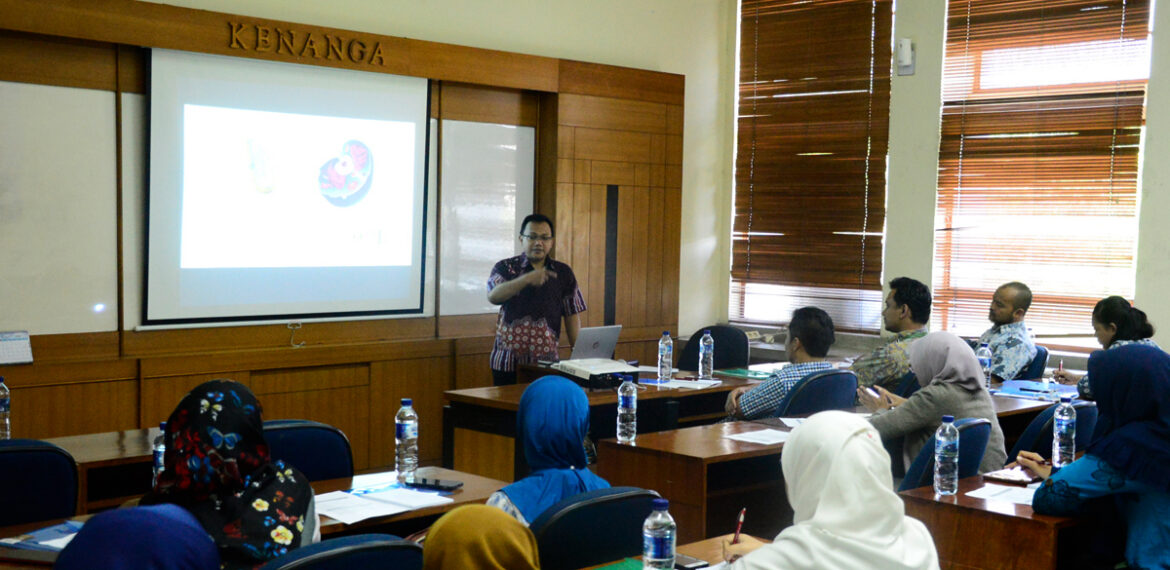
Present were 25 participants consisting of lecturers, researchers, laboratory staff of IPB University’s departments and study center, and graduate students who focus on bioscience research.
This event is the result of a partnership between HSC IPB University and PT. Genecraft. The workshop was divided into two sessions, theoretical presentation by IPB University’s speakers and practical session by a speaker from PT. Genecraft. The material that is given consisted of the principles and development of PCR techniques, data analysis, experimental design, and real-time PCR applications. The sample used to practice using real-time PCR was processed food products with a focus on detection of pig DNA to support the establishment of the halal status of products.
Dr. Uus Saepuloh, MBiomed (IPB University Primate Animal Study Center) and Dr. agr. Asep Gunawan, SPt, MSc (IPB University Faculty of Animal Husbandry and Halal Science Center researchers) were the speakers at the workshop. Dr. Asep, who also acted as the Chairperson of the activity, said that this activity was a way to form a network between units in IPB, to be able to exchange information and get to know each other. "Even if there are limitations in research and other activities, it can be communicated and we can find the solution," Dr. Asep.

