
IPB Students are about to Optimize Marine Products in India
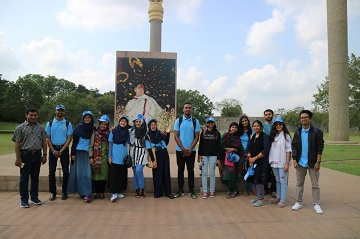
Indonesia as an archipelago of 17,502 islands has a coastline of 81,000 kilometers with an area of fisheries in the sea around 5.8 million square kilometers. The fact that the fisheries and marine sector has bright prospects, especially in fulfilling protein-based food needs, encourages Susi Susilawati, student of the Department of Aquatic Product Technology, Faculty of Fisheries and Marine Sciences (FPIK), IPB University to invite people in all parts of the world to be able to optimize marine products as one of the foods needed to meet protein needs.
Susi conveyed this idea in the International Exposure Visit on Youth Engagement to Meet SDGs in Chennai, Tamil Nadu, India (18-22 / 2). This international conference is a program from the Center on Rural Development Asia and the Pacific (CIRDAP) in collaboration with Rajiv Gandhi Nation Institute Youth Development.
Susi is one of 20 young women who want to contribute to the changing world that was invited to this conference. The participants come from Indonesia, Malaysia, the Philippines, Afghanistan, Bangladesh and Fiji.
“God, I found a new family. It was amazing! I feel I have a great opportunity as a stakeholder of the future because I am youth. There, I told them about the potential of the sea which can be utilized in all fields, as well as the problem faced by the sea, namely marine plastic waste, “said Susi.
According to her, resources on the Indonesian mainland are now running low but paradoxically with increasing numbers of people. “Indonesia is 70 percent sea and full of potential resources in it. So why not turn to the sea waters to be optimized for its potential as Indonesia’s futuristic food. In order to keep up the change. “Marine products can be diversified and developed into other products and packaged well,” explained Susi who is currently also active in the Strategic Study Department, FPIK Student Executive Board.
Susi also said that behind all the potential of the ocean that is owned, there is an anxiety for the sustainability of the sea, which is garbage. The amount of waste becomes a problem point of the sea because it disrupts marine ecosystems and results in the sea being unable to optimize its benefits. (SMH / Zul)

