IPB Explore Potential Implementation of Animal Welfare in Beef Cattle Supply Chain
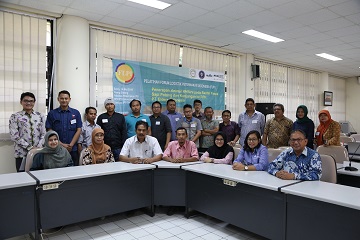
Faculty of Animal Science of Bogor Agricultural University (FAPET IPB) in cooperation with Forum Logistik Peternakan Indonesia (FLPI) and with support from Rumah Potong Hewan (RPH) PT. Elders Indonesia organized Animal Welfare in Beef Cattle Supply Chain Training. The theme for the training is “Animal Welfare Implementation in Beef Cattle Supply Chain” and was held at Faculty of Animal Science, Dramaga Campus Bogor Agricultural University, Bogor (14/5).
The implementation of animal welfare is a shared responsibility of all stakeholders, from government, higher education institutions, private sectors and livestock farmers’ community. This topic is accordant to the principle of Veterinary Public Health and Animal Welfare.
Dean of Faculty of Animal Science of Bogor Agricultural University, Dr. Muhamad Yamin explained the objective of this program is to provide understanding for participants about the implementation of Animal Welfare’s principles comprehensively in beef cattle supply chain.
“Participants also learned about the managing system of ruminant abattoir that is hygienic, meet the standards of Safe, Healthy, Whole and Halal (ASUH) and also competitive. I hope this training will give the participants the understanding of implementing management practice of beef cattle supply chain which is accordant to the Animal Welfare from upstream to downstream. Besides being trained, the participants also visited PT. Elders Indonesia’s abattoir facility,” he conveyed.
In term of livestock husbandry, animal welfare is not only can be assessed from economic side. Implementation of animal welfare is a manifestation of a higher respect to the animal in order to protect animal rights as God’s creatures. Thus animals will also give good feedback to humans.
Cattle distribution chain in Indonesia is still too long with transportation system that has not been well-organized, especially for cattle transportation between islands. This is the cause why the transportation costs are very high and also can affect the productivity and wellbeing of the cattle.
The main challenge is the lack of facilities and infrastructure, the lack of skilled human resources who are able to handle the livestock according to the aspect of animal welfare in beef cattle supply chain, and also the absence of appropriate livestock transport process.
Therefore, it needs mutual understanding from all stakeholders who are engaged in beef cattle industry to overcome this challenge, so the livestock supply/distribution chain can be well organized, the livestock performance during and after being transported can be maintained, and at the end of the day, the optimum and sustainable profit can be obtained.
One of the efforts that can be done is conducting comprehensive researches that involve all stakeholders of beef cattle supply chain. Research activity can be initiated by conducting trainings to study and to evaluate the role, the interest, and the power of each stakeholder.
Present as the resource person from Australia Meat and Livestock Service Manager, Vet. Helen Fadma, Division of Anatomy, Histology, and Pharmacology, Department of Anatomy, Physiology, and Pharmacology, Faculty of Veterinary Medicine Bogor Agricultural University, drh. Supratikno, M.Si, PAVet. (qa)