A Group of IPB Researchers Use Calcium Chloride to Extend Shelf Life Starfruit
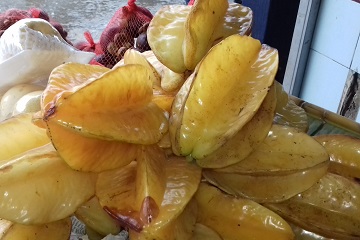
Carambola or starfruit, is the fruit of Averrhoa carambola, a species of tree native to Indonesia, the Philippines, Malaysia, Vietnam, Nepal, India, Bangladesh, Sri Lanka, Mauritius, and Seychelles. Carambola is rich in antioxidants, potassium, and vitamin C; and low in sugar and sodium. It is also a potent source of both primary and secondary polyphenolic antioxidants. This fruit can be used to treat various diseases such as lowering blood pressure, lowering cholesterol, treating diabetes mellitus, anti-cancer and facilitate digestion. Star fruit is a perishable fruit, has a short shelf life, and easily attacked by microbes. This easily leads to the emergence of postharvest diseases in the fruit.
Prof. Sutrisno, Rokhani Hasbullah and Khoirul Mukhtarom researchers of the Department of Mechanical Engineering and Biosystem, of the Faculty of Agricultural Technology, of Bogor Agricultural Institute (FATETA IPB) explained, on the basis of ethylene production, the fruits can be divided in two categories i.e. climacteric and non climacteric fruits. The climacteric fruits continue to ripen even after their removal from stem or in other words they continue to produce ethylene gas, so the ripening process continues even after harvesting but non climacteric fruits don't ripen once removed from stem. "Climacteric fruits are able to continue ripening after being picked, a process accelerated by ethylene gas, such as starfruit. Some fruits will continue to ripen after they are harvested, such as bananas and papaya. These fruits are called climacteric. Generally the climacteric fruit has a longer shelf life than non climacteric fruits. The maximum shelf life of star fruit is usually only a week at room temperature, "said Sutrisno.
This research stated further, one of the postharvest treatments that can be given to extend its shelf life after harvesting is by hot water treatment and immersion in CaCl2 (Calcium Chloride) solution. "Immersion in hot water, these treatments kill pathogens that cause surface decay, while maintaining fruit quality during prolonged storage and marketing. While immersion period in CaCl2 solution using response surface method (RSM) is for post harvest handling of starfruit in order to maintain its quality during storage," he explained.
He and two other researchers, Rokhani Hasbullah and Khoirul Mukhtarom from the Department of Mechanical and Biosystem Engineering, of the Faculty of Agricultural Technology, Bogor Agricultural University (FATETA IPB), conducted research program to determine the effect of storage and quality on starfruit.
"We have tested this heat treatment by soaking the star fruit with a temperature controlled around 42 degrees Celsius and immersion with CaCl2. The microbial diseases of tropical fruits and fruit fly eggs from trees will hatch during the distribution process. So hot water treatment will be important to kill them and CaCl2 to strengthen the cell network for fruit more resistant and not quickly damaged. The fruits were soaked twice, first was with hot water and then with CaCl2 solution," he said.
The experiments revealed, this technology is capable to extend the shelf life starfruit longer compare their general shelf life. "From this study starfruit is able to survive up to twice the shelf life generally with storage at room temperature. We want to help farmers and traders who usually do not have a special cooling container like in supermarkets, in fact this technology to help merchants to keep the shelf life of fruit longer," he said.
This treatment does not change the taste and color of the fruits, soaking process was only about 1-2 minutes. "This is an environmentally friendly treatment, if CaCl2 is a food grade that calcium chloride is a safe food additive and levels are also not high only one percent and also easily available in the local market," he said. He added, "Theoretically, this technology should be able to extend shelf life. This technology is intended for small traders so as not to burden them in the procurement, but can extend the shelf life of the fruit, "he concluded. Nevertheless, further research is rally required to decide the optimum temperature of hot water treatment and the optimum CaCl2 content, so it will produce the maximum treatment effect. (Wied)