
Limiting the Feeds, IPB Researchers Proves that Muscovy Ducks Still Lay Eggs Productively
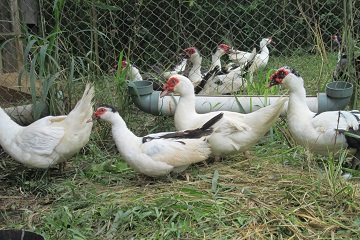
Muscovy ducks are originated from South America and they enter Indonesia through Philippines. This kind of ducks have faster growth and greater body weight than ordinary ducks. The development of Muscovy duck as Indonesia's superior waterfowl still faces several obstacles. These constraints include the population increase and low egg production, lack of appropriate feed data and feeding methods, and extensive maintenance systems.
Four researchers from the Department of Animal Production and Technology, Faculty of Animal Husbandry, Bogor Agricultural University (IPB), Jakaria, Rukmiasih, C. Budiman and G. Ayuningtyas studied female Muscovy duck productivity with limited feeding during the growth period.
Unlimited feeding or ad libitum can increase the rate of growth and excess intake of energy derived from feed. The excess energy will be stored in the form of fat deposits. The high fat deposits in the body cause early sex maturation. "Whereas the condition of the organ and the reproductive tract is not ready to support the optimum egg production, therefore, the regulation of feeding should be applied by restricted feeding method in the period of poultry growth," said Jakaria.
In this experiment, the researchers used 32 one-day-old female ducks (DOD) given a combination dietary between commercial broiler and rice bran. The treatment provided by this research consisted of three levels, namely 100 percent ad libitum duck feeding as control (P1), 70 percent ad libitum (P2), and 40 percent ad libitum (P3).
From the results of this experiment, the researchers found that dietary restriction had an effect on ovarian weight and blood cholesterol at age of 22 weeks. The ovarian weight of female duck treated as P1 was 5.77 gram, higher than ovarian weight on two other treatments at the same age of 22 weeks. The weight of ovaries on P2 and P3 treatments were 17.85 percent and 9.19 percent respectively of P1 ovary weight.
The limitation of feeding also affected cholesterol levels. The average P2 cholesterol levels (131.73 milligrams per litre) and P3 (120 milligrams per litre) were lower than P1 (147.91 milligrams per litre). The researchers explained that the feeding rate could regulate the fatty profile, so that the animals given limited feed had a relatively low level of fat compared to livestock fed with ad libitum. The limitation of feed done in the period of growth also had no effect on egg production.
"Quantitative feed restriction can reduce the consumption of feed and body weight, without decreasing the production of eggs of female poultry. The egg production in one cycle in this study is 14 to 17 eggs," he said.
The team therefore concluded that feeding limitation during the growth period could suppress the growth of the Muscovy ducks, suppress the development of ovarian follicles, and significantly affect blood cholesterol levels. The 70 percent feed restriction had been able to delay the sex maturation of the female ducks with the same egg production as the P1 group. (TK)

