IPB Researchers Use Jicama Seeds as Natural Insecticide Against Maggots Causing Myiasis
Myiasis is an incidence occurred when the fly larvae live in living tissues of animals and humans. Myasis-causing fly larvae are also called maggots. It attacks all types of warm-blooded vertebrates including humans. To date, the case of myiasis is still a constraint in Indonesian livestock. The main agent of the myiasis-causing fly is divided into three, namely Cochliomya hominivorax, Wohlfahrtia magnifica and Chrysomya bezziana.
Cochliomya hominivorax flies spread in the Americas. Wohlfahrtia magnifica flies spread in Europe to China. Chrysomya bezziana flies are scattered in tropical and subtropical parts of Africa, Indian subcontinent, Southeast Asia including Indonesia and Papua New Guinea.
Five researchers consisting of Aulia Andi Mustika, Kesikawati Hadi Upik, Min Rahminiwati, Ietje Wientarsih from the Faculty of Veterinary Medicine of Bogor Agricultural University (FKH IPB) and April Hari Wardhana from Bogor Veterinary Research Institute examined all parts of jicama plants potential as bio-insecticide against the larvae of C. bezziana fly.
"Control of myiasis in the field generally uses antibiotics and synthetic insecticides that can cause negative impacts such as the development of new resistant fly races, the killing of natural enemies of pests, the residues left in meat and milk. A proper solution for handling cases of myiasis is needed. One solution is the development of medicinal plants or herbs. Herbal plant that has potential as a vegetable insecticide (bio-insecticide) is jicama plant. Ethanol extracts of seeds, stems, and leaves of jicama contain bioactive compounds called rotenone which is useful as a vegetable insecticide. The study, which lasted for approximately one year, was aimed to determine the effectiveness of jicama plant as a vegetable insecticide against fly larvae (C. bezziana) tested directly in vitro and in vivo in animals," said Aulia.
The results of in vitro test showed that the ethanol extract of jicama seeds had the best efficacy in killing the larvae of C. bezziana fly at 1st and 2nd instar stages and were able to cause pupa of 3rd stadium larvae not to hatch. Furthermore, a cream was made using the extracts to be tested directly in sheep. The results showed that cream containing jicama seed extracts was able to kill larvae at all stages quickly and accelerate wound healing.
Rotenone active substance contained in jicama seeds is suspected to play a major role as an insecticide. Its mechanism of action is to inhibit the formation of energy in the mitochondria, so that the larvae run out of energy, weakend and eventually the larvae experience death.
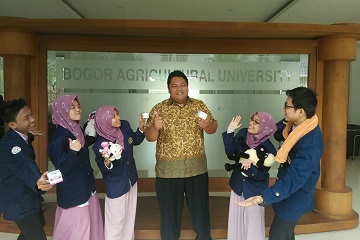
Upon the findings, Aulia then guided FKH IPB students to try to disseminate the product to farmers throughout Indonesia through Student Creativity Program (PKM). The product was then named Creamy. This product turned out to get appreciation from the public. Creamy products now also spread to all over Indonesia, but the distribution is still limited. The product is in the process of being patented and will be registered to the Ministry of Agriculture of the Republic of Indonesia (Kementan RI) as a natural animal medicine.
"These findings are expected to be a solution to the expensive myiasis medicine as well as to the dangers of residual and resistance of those products available on the market," she said. (TK)