Student of IPB Utilized the Habbatussauda Waste to Increase the Local Sheep Weight
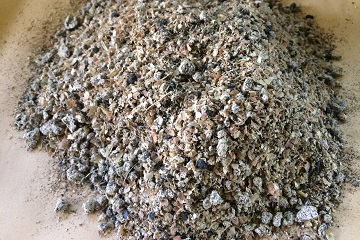
Student of the Department of Science of Nutrition and Feed Technology, Faculty of Animal Husbandry, Bogor Agricultural University (IPB), Ryza Agung Gustian, conducted a study which aimed to evaluate the effect of the giving of processing the industrial waste of habbatussauda (Nigella sativa) on the performance of the local sheep. The local sheep was the meat-producing livestock needed by the community. Usually the demand for the sheep meat increased during the Eid al-Adha and the aqiqah events. Other than that, the contemporary culinary also used a lot of the sheep meat.
Generally, the community wanted the young sheep with certain body weight. Therefore, to meet the demand of the community, it was necessary to feed the source of protein in the local sheep to support the addition of the high body weight.
This was what underlied Ryza to research the habbatussauda waste for feed the sheep. The habbatussauda or often referred to as the black cumin was an original plant of the region of West Asia and was often cultivated in the Middle East region. In Indonesia itself, the habbatussauda was widely planted in the upland areas such as Dieng, Central Java, and Lembang, West Java.
Part of the habbatussauda plants which was often used was the seeds. The seeds were commonly used as the herbal remedy, and the main component of the seeds of the habbatussauda was the essential oil. The seed processing of the habbatussauda to be extracted would produce the waste in the form of the oilcake. The habbatussauda waste contained the high crude protein and could be used as the feed protein source which was used as the sheep feed.
Ryza tested three treatments with five groups as the replicates. He used 15 local male sheep about five months old. The treatments were as follows: First treatment (30 percent of forage plus 70 percent of concentrate without the habbatussauda waste), Second treatment (30 percent in form of forage plus 70 percent of concentrate containing 14 percent of the habbatussauda waste), Third treatment (30 percent of forage plus 70 percent of concentrate containing 28 percent of the habbatusauda waste). Furthermore, the sheep was fed according to each treatment with a maintenance period of two months.
The research results showed that the utilization of the habbatussauda waste gave a positive effect on the local sheep performance through the increase in the body weight of the sheep higher. Other than that, with the analysis of IOFC (Income Over Feed Cost), it was obtained that the higher revenues without affecting the dry matter consumption and the efficient use of ransume. (FY/ris)