Professor of IPB: Bioprocess Technology Can Give Value Added
The challenge for agroindustry development in Indonesia is how to increase the value added of agricultural products. Agroindustry became one of the leading products in the modern agricultural sector. But unfortunately, the development of agroindustry is still constrained by a number of factors.
Examples of potential biotechnology-based agroindustry to be developed are starch-based agroindustry and its derivatives, beverages and probiotics agroindustry, additives agroindustry, fragrances and enzymes, plantation bioindustry, marine and fisheries bioindustry, biopolymer agroindustry, agrobiofarmaka industry, feed agroindustry and energy industry.
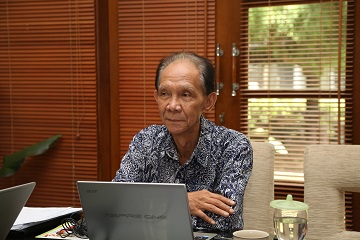
In order to increase the productivity of agroindustry, Professor of Faculty of Agricultural Technology (Fateta) Bogor Agricultural University (IPB), Prof. Dr. Djumali, introduces bioprocess engineering to increase the added value of environmentally friendly and sustainable agroindustry products.
In the Professorial Oration of IPB at Auditorium Andi Hakim Nasoetion, Dramaga Campus, Bogor (24/2), Prof. Djumali said the use and application of process technology is a requirement to increase the value of agricultural production competitively in the global market.
He explains, bioindustry is an industry that implements the process system or the biological transformation, including agroindustry applying bioctechnology. Some examples of prospective biotech agroindustry to be developed, such as starch based agroindustry and its derivatives.
He mentioned, bioprocess engineering for value enhancement such as inulin from bulb dahlia as one form of increasing value added of agroindustry. Inulin is a substrate with high fructose content.
"Rendement of inulin flour obtained from the bulb dahlia of 48.20 percent with inulin levels reached 80.09 percent," said Prof. Djumali.
Obtaining inulin, he added, was derived from further enzymatic processes for the production of FOS (fructose-oligosaccharide) or fructose.
According to him, research on inulin extraction methods from local plants such as pandanus, and red fruit from Papua is still ongoing today.
Other agro-industrial bioprocess is cyclodextrin from starch. The development of this process is carried out by using intact bacterial cells that have cyclodextrin activity.
"Bioprocess engineering for eco-friendly agro-industries exists on the production of alanine from palm oil processing liquid waste," he said.
Next is biosurfactant that can be an alternative to replace chemical surfactant. Bioprocess engineering for the development of sustainable agro-industries is very potential in Indonesia as a country that has renewable natural resources, in the form of crops (biomass), microbes, water, wind and oceans. "For example bioethanol production," he said.
Prof. Djumali added that bioprocess development strategy is done through three phases: laboratory scale research, pilot plant scale, and industrial scale development.
"The results from the process performance study obtained at pilot plant scale and economic feasibility analysis result, become the basis of the bioprocess application on the industrial scale," said Prof Djumali. (*)