A group of IPB Researchers: Rodents Carry Infectious Agents Include Helminths (parasitic worms)
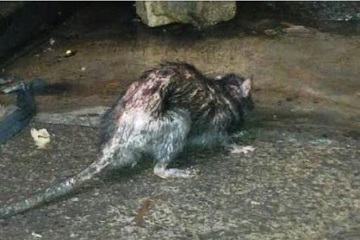
Rodents are the most diverse order of the mammals, with over 2,200 species. They inhabit all continents except Antarctica, and are adapted to a wide range of habitats. Other than the occasional rodent pet, rats are typically unwanted guests in any home. The house mouse (Mus musculus) and the brown rat (Rattus norvegicus) or Norway rat, is one such intruder. Also known as the common rat, sewer rat, wharf rat, and many other names; the brown rat is the most well-known and is the most common. Rats cause extensive damage to your home and are a considerable threat to your health. They gnaw through walls and wires, spread disease, and make everyone’s skin crawl. If you think you might have rats, you need to get rid of them as soon as possible. Rats are incredibly clean animals that prefer a sanitary environment to any other, although they can carry several diseases. These rodents adapt to all environments, it is one of the agents to spread of infectious diseases in humans.
As with all rats in general, they have excellent memories. This means, they will remember any successful route to food and water after the first time they complete it. The activity of rats when looking for food or nesting place often intersect with humans, so they are very high potential to transmit diseases. Rodents carry a wide range of disease-causing organisms, including many species of bacteria, viruses, protozoa and helminths (worms). Rodents can cause major problems through spreading various diseases to animals and humans. They are carriers of various pathogens. Rat bites and scratches can result in disease and rat-bite fever. Zoonotic diseases associated with rodents include rat bite fever, tularemia, hanta virus, lymphocytic choriomeningitis virus, leptospirosis, and salmonellosis. Rat urine is responsible for the spread of leptospirosis, which can result in liver and kidney damage. Complications include renal and liver failure, as well as cardiovascular problems.
To identify the diseases generated by rodents, a team of researchers of the Faculty of Veterinary Medicine of Bogor Agricultural University (FKH IPB), namely Dr. drh. Risa Tiuria, drh. Ridi Arif, and Herianto Sitepu, conducted the research program to analyse the types of worms in the organs of rats (Rattus norvegicus) and house mice (Mus musculus). They also act as vectors or reservoirs for many diseases via their ectoparasites such as fleas, ticks, lice and mites, as well as some diseases carried by mosquitoes. These two species of mice were studied, because they live in close proximity to humans in cities and is the cause of extensive economic damage to farms, food products, industries, and households. Direct transmission is caused by consuming water or food contaminated by worm eggs, whereas indirect transmission occurs through intermediates of flea flies, and mosquitoes.
Dr. Risa explained, various research revealed that almost all the organs of mice have been infected by infectious diseases (dangerous), especially diseases caused by worms. The adult worms are found in rats. Infected rats excrete the parasite larvae in their faeces. The parasites can then infect snails and slugs that come into contact with infected rat faeces. People can be infected when they deliberately or accidentally eat a raw snail or slug that contains the lung worm larvae or if they eat unwashed lettuce or other raw leafy vegetables that have been contaminated by the slime of infected snails or slugs. People infected with rat lung worm do not pass the infection on to others.
There are two types of rat tapeworm, Hymenolepis nana and H. diminuta. Both species use a beetle (e.g. a flour beetle) as the main secondary host and are found in warm climates worldwide. The worms identified in the mice were rat tapeworms (Hymenolepis diminuta), Nippostrongilus brassiliensis, Angiostrongylus cantonensis, and Strobilocercus. While the worms are identified in house rats i.e. Hymenolepis diminuta.
Herianto, one of the researchers in this study, also explained that in this study, found that the most common infectious cause of eosinophilic meningitis is Angiostrongylus cantonensis, which is transmitted largely by consumption of snails/slugs. Its natural definitive hosts are rodents, and molluscs are the intermediate hosts. While Hymenolepis diminuta and Nippostrongilus brassiliensis are found in the intestinal tract, and Angiostrongylus cantonensis in this rodent heart organ.
"The worms found in this study are zoonotic helminths. Infection occurs in rodents is mostly single infection. Male and adult rodents carry numerous pathogens or infective agents and worms," he concluded. (Wied)