
IPB Researchers Created Functional Powder Drink Made of Sea Slug
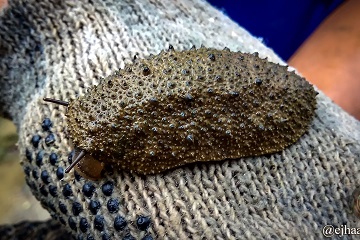
Straddling the equator, Indonesia is a tropical country with a wet, hot, humid climate the entire year, with high temperatures often in the 28 °C during the day and the steamy 23 °C at night. Indonesia as one of the tropical countries has high biodiversity as a source of natural materials derived from plants, animals and microorganisms that can be utilized for food. One of them is the sea slug (Discodoris sp.).
Sea slug (Discodoris sp) is a member of nudibranch marine invertebrate usually called as non-shell gastropod. Sea slug has been used by Bajo People in Buton Island as aphrodisiac and food supplement. Sea slugs are small and colorful sea creatures, well-known for containing deadly chemicals that they use on their enemies. Sea slugs provide enormous benefit to humankind in medicine and biomedical research. There is the potential to obtain more drugs and solve more health problems. One of the important compound in Sea slug is omega-3 fatty acid, which is useful for our health. Research on the source of fatty acids in functional drinks derived from sea slug in powder form of has never been implemented yet. It is the reason, Prof. Nurjanah, together with Fitri Syaputri, M. Agoes Jacob and Rosita A.J. Lintang of the Department of Aquatic Product Technology, of the Faculty of Fisheries and Marine Sciences of Bogor Agricultural University (FPIK IPB) carried out this study. It is mainly designed to cover the high-value components and bioactives as well as the multiple biological and therapeutic properties of sea slug with regard to exploring their potential uses for functional foods and nutraceuticals.
"Indeed there have been many study programs on the use of sea slugs for functional drinking but in the paste form. The purpose of this study was to determine the chemical composition of sea slug and to obtain the best formulation of functional powder drinks," said Prof. Nurjanah. The study was mainly designed to cover the high-value components and bioactives as well as the multiple biological and therapeutic properties of sea slug with regard to exploring their potential uses for functional foods and nutraceuticals.
The study was conducted in two stages, the first stage was the preparation of raw materials by extracting sea slug and other additives, and the stage was the formulation of functional powder drinks by spry drying method. The sea slug as raw materials used by this study were obtained from Cirebon waters, West Java. The sea slug extract was mixed with additional ingredients such ginger, citric acid, maltodextrin, and soybeans for the formulations.
The study revealed that sea slug contained various elements. The chemical composition of dried sea slug consists of protein 56.09 percent, water 9.95 percent, ash 8.68 percent, fat 3.27 percent, carbohydrates 23.23 percent, and fiber 0.90 percent. Meanwhile, the best formulation at the initial stage for functional drink containing 0.20; 0.24; and 0.28 g. of sea slug.
The protein contain of sea slug is high it reaches 56.09 percent which serves as a organic body-builders and organic substances. Analysis of the first formula, three best formulations of functional beverage based on organoleptic test were obtained. The best formulation with highest omega-3 and sensory was achieved in formulation, where they were dissolved into 150 ml of water with a temperature of 70-900 C. Sea slug functional beverage can be sources of omega-3 fatty acid. Those three formulations contain 0.20; 0.24; and 0.28 grams sea slugs,” he explained. (Wied)

