A Group of IPB Researchers Analysed the Effect of Different Chilling Frequency on Hatchability of Duck Eggs
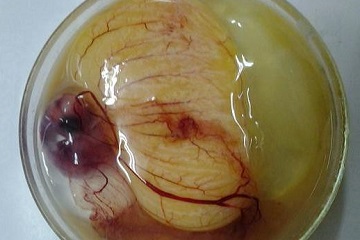
Alabio duck is a dual purpose breed originating in Indonesia. It is also locally known as Itik Alabio. It is a very popular duck breed in Indonesia and highly populated in South Kalimantan. The Alabio duck was mainly raised as a laying duck breed. But now, they are also being raised for meat production, as they produce tasty meat. Meanwhile, Cihateup duck is one of the local Indonesian poultry genetic resources originated from West Java. These ducks are raised in Tasikmalaya and its surrounding area. Cihateup duck raised as layer or meat type duck is potential to provide business opportunities for people in West Java. Both strains have rapid growth, so they are the right domestic duck to be bred, the strength of hybrid crosses give a larger descendant of one of the grant parent to produce broiler ducks.
The process of hatching naturally occurs because of the heat transfer from the parent that incubates one egg and the other, this natural method has been applied for the hatching machine. Different types of bird eggs have different temperature and humidity needs, and take different lengths of time to hatch. Chicken eggs require a constant temperature every day according to the ideal temperature of hatching chicken eggs, while hatching management on duck eggs is better performed periodic cooling for embryo development. In addition, the duration of duck egg incubation reaches 28 days, whereas in chickens only reaches 21 days so that the possibility of factor failure of hatched eggs higher.
Three researchers of Bogor Agricultural University, namely Rukmiasih, R. Afnan and F. Darajah of the Department of Animal Production and Technology, of the Faculty of Animal Husbandry of Bogor Agricultural University (FAPET IPB) analysed the effect of different cooling frequencies on hatching duck eggs Cihateup-Alabio bred.
The material used for their research program were Cihateup-Alabio (CA) 491 (four hundred ninety one) duck eggs, they were obtained from Ciawi Livestock Research Center, Bogor. However, those eggs were hatched in Poultry Breeding Laboratory of the Faculty of Animal Husbandry of IPB. This research treated the stored egg in the hatching machine with chilling system frequency once, twice, and 3 (three) times a day. The chilling of the eggs had been carried out every day according to each treatment level starting from 3rd day after the eggs were put into the hatching machine. The once chilling frequency treatment was carried out during the day at 12.00-13.00. Treatment for 2 times chilling frequency had been carried out in the morning (06.00 am – 07.00 am) and afternoon (5:00 pm – 18:00 pm). 3 times chilling frequency had been carried out in the morning, afternoon and evening at the same time.
The experiment revealed that hatchability of eggs treated with chilling twice a day produced the highest results of 37.94 (thirty seven point ninety four); while the results of chilling at one and 3 times frequency were 34.38% (thirty four point thirty eight percent) and 34.70% (thirty four point seventy percent) respectively. This was due to condition for the twice chilling frequency, the first chilling in the morning was used to overcome the increased temperature due to metabolism at night and prevent the increase in temperature during the day. Afternoon cooling was used to cope with rising egg temperatures due to metabolism during the day and preventing night time temperatures
"The chilling frequency twice a day, in the morning and evening, had produced the best result as the hatchability was highest at 37.94% (thirty seven point ninety four). The Characteristics of unhatched embryos, among others, due to the unperfect shape of the beak, the defect in the legs, the unperfect shape of head, and the yolk has not been entirely entered into the body. The death of embryos were due to the temperature which does not match with the optimal temperature and humidity for embryonic development, and the accumulation of disinfectant in eggs, "said Rukmiasih. (Wied)