
A Group of IPB Researchers Analysed the Additional of Fish Oil on Eel Feed to Improve its Growth
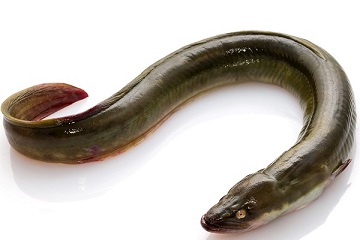
Anguillids, which belong to the family Anguillidae, are generally distributed in tropical and temperate seas and are occasionally found in the eastern Pacific and southern Atlantic. The life cycle consists of movements in two geographical directions, seaward from freshwater to spawn and landward during the early stages of development. The freshwater eels are important animals because they have a unique catadromous life history and are used as food resources. One of the reasons for the drastic decline in eel populations is overfishing, which has caused a high demand for eel aquaculture; eel aquaculture completely depends on wild juveniles, and in contrast to animals, artificial propagation has not yet succeeded for the eels. The main problem of eel farming (Anguilla bicolor bicolor) is the slow growth and high feed conversion. However, useful scientific research and information on the biology and stock assessments of tropical eels are lacking. Good nutrition in animal production systems is essential to economically produce a healthy, high quality product. Therefore it is necessary to do research to get the right fat content in the feed by adding fish oil to improve the growth performance and fatty acid composition of the fish. One source of essential fatty acids is fish oils that play an important role in metabolic activity.
Accordingly, a group of researchers, namely Nur Bambang Priyo Utomo of the Department of Aquaculture, of the Faculty of Fisheries and Marine Sciences of Bogor Agricultural University (FPIK IPB); Retno Cahya Mukti of the Aquaculture Studies Program, of the Faculty of Agriculture of Sriwijaya University (UNSRI); and Ridwan Affandi of the Department of Water Resources Management of FPIK IPB, carried out the research program to analyse the effect of fish oil addition on the growth and fatty acid composition eels.
In this experiment, the researchers utilized eel in mean weight of 9.90 gram which were kept in a 120ltr aquarium with stocking density 1 gram/liter, and was kept for 40 days. This research consisted of four treatments, eels were fed either by dietary fish oils of 0 percent, 5 percent, 10 percent, and 15 percent. All treatments consisted of three replications. The quantity of feed to be given to a pond or cage each day should normally be based on a percentage of the biomass present (total weight of animals), 3 percent. They were given four times a day at 6:00, 11:00, 16:00 and 21:00.
"The artificial feed used was grouper fish feed containing 43 percent protein and 9 percent fat. Artificial feed first were mashed then fish oil with different levels were added. The fish oil was added into 1 kilogram of mashed artificial feed. Then the feed was formed and proximate analysis of feed was carried out, "said Bambang.
The research revealed that the addition of fish oil in the diet gave different effects on specific growth rate (0.88 to 1.36 percent), feed efficiency (30.18-48.53 percent), protein retention ( 14.57-20.24 percent), fat retention (16.77-52.49 percent), energy retention (12.38-20.10 percent), and hepatosomatic index (1.72-2.72 percent). With specific growth rates, feed efficiency, protein retention and the highest energy retention in the fish oil addition treatment by five percent.
"Fish biomass in each treatment increased during the experiment. This revealed that the feed given during the experiment exceeded the standard requirement of the body (maintenance), so the excess feed will be utilized to achieve their growth target. Energy needs for maintenance must be met first before the growth, "he said.
While on the eel survival, it did not show any difference, it was 100 percent. In the fatty acid composition, the total composition of unsaturated fatty acids 30.91 to 40.95 percent, n-3 fatty acids 6.10-8.19 percent, and fatty acids n-6 6.18-8.19 percent. Thus, the researchers conclude that the addition of fish oil in Anguilla bicolor bicolor feed can be carried up to 5 percent (13 percent fat content). (Wied)

