Nutritionist of IPB: Healthy Pregnant Mother will Save the Next Generation for Indonesia
Indonesia is a rich archipelago with an abundance of natural resources. At the same time, the country is the world’s sixth-largest emitter of greenhouse gases, mainly due conversion of its forests and carbon-rich peat lands to agricultural fields. Indonesia is unquestionably one of the world’s top biodiversity rich countries and thus a priority for global conservation. Indonesia is home to more than 100 Critically Endangered tree species, many of which require urgent conservation action to prevent their extinction. Various crops are grown in this tropical country. These plants certainly have a high nutritional value and good for the human body. However, sadly to say, in Indonesia malnutrition rates, especially in toddlers reach 17% in 2017. This figure is based on the adequacy of weight in toddlers. When compared to the WHO threshold value of 10%, Indonesia is in an emergency.
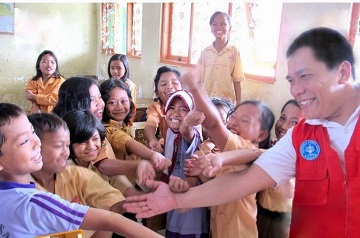
In response such hot issue, one of the Professor Chair Holders of the Department of Community Nutrition, of the Faculty of Human Ecology of Bogor Agricultural University (FEMA IPB), Prof. drh. M. Rizal Damanik, Mrep.Sc, PhD has shared his view on such problem. Lecturer who is familiar to be called "Mr. Torbangun" mentioned that the problem of malnutrition is a very serious problem because it will have a long impact.
If malnutrition is experienced as a child then there will be growth that is not optimal on the organs of the body. This of course will also impact on the intelligence of children, namely the ability of low brain capture power. The mental development of children with stunted growth also be afflicted. The hampered cognitive abilities in malnourished children causes the decline of their economic productivity so it will impact the national economy. Stunting can reduce an individual’s productivity at a young age, and increases risks of developing non-communicable diseases when older – this is the double burden of malnutrition. If this happens, then these individuals will grow into a weak generation both physical and brain intelligence.
Nutritional problems in children constitute the major health problem in developing countries, including Indonesia. Although the problem of malnutrition is a serious problem, the problem is not getting enough attention. In spite of its importance as a determinant of health and development, malnutrition is still a neglected area and too little has been done to address its causes and serious social and economic implications. Although treatment protocols for severe malnutrition have in recent years become more efficient, most patients (especially in rural areas) have little or no access to formal health services and are never seen in such settings. Long-term insufficient nutrient intake and frequent infections can cause stunting, whose effects in terms of delayed motor and cognitive development are largely irreversible. "Just imagine, if in one area experiencing malnutrition, then what will happen is the community grows into a generation of lazy and do not have strong work ethic. The impact will appear various social problems often involve problems that affect real life such as thuggery. Costs incurred to overcome this problem was much greater than the cost of preventing malnutrition from the beginning, "said Prof. Rizal.
Prof. Rizal also explained the worst damages of malnutrition happen during pregnancy and early childhood – from conception to two years, i.e. the first 1000 days. Cases of malnutrition in toddlers generally originated from a baby who was born stunting or low birth weight baby (BBLR) that is less than 2.5 kg. Undernourished children have weaker immune systems and are thus more susceptible to infections and illnesses. The condition of the baby at birth is certainly influenced by the condition of the mother during pregnancy. Therefore, it is important to meet the nutritional needs of pregnant women so that healthy born babies and future generations are also saved. This maternal nutrition fulfillment program has been regulated by the government in Government Regulation number 42 of 2013 on the acceleration of nutrition improvement called the Determination Program of 1000 HPK (First Day of Life). This program is in the form of supplementary feeding for pregnant women, worm infection, and giving of iron and folate. 1000 HPK starts from the moment of conception or pregnancy until the child is 2 years old.
"This program has been very good and hopefully will be perceived more by pregnant women throughout Indonesia," said Prof. Rizal. In addition, he also added that to solve nutritional problems good cooperation from various parties is needed, because the nutritional problem is an interrelated problem between one institution with other institutions not only charged to one institution only. (Wied)