IPB Researchers Utilized Vetiver for Processing the Tofu Industry Wastes
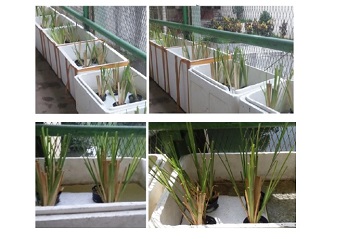
Tofu is a staple of Indonesian cuisine. Over 80,000 companies nationwide make it, and mostly are family-run. Wastewater from the process is a major environmental problem, and most of these industries do not have sewage treatment units. Currently, the wastewater from these enterprises is released without being completely treated, producing odour, greenhouse gas emissions and pollution in both water and soil. However, only a small percentage of tofu waste is utilized as nutritious feed for livestock, the remainder being incinerated and/or reclaimed as industrial waste, thereby contributing to serious pollution problems. The disposal of liquid waste directly to public water bodies greatly disrupts the balance of aquatic ecosystems.
Seeing this phenomenon, a team of researchers from Bogor Agricultural University's Bogor Aquatic Resource Management (IPB), namely Romi Seroja, Dr. Hefni Effendi, M.phil, and Dr. Sigid Hariyadi, M.Sc implemented research program to utilize vetiver (Vetiveria zizanioides) and zeliac as phytoremediation for liquid waste processing industry. Vetiver grass is grown for many different purposes. The plant helps to stabilise soil and protects it against erosion, but it can also protect fields against pests and weeds. Vetiver has favourable qualities for animal feed. From the roots, oil is extracted and used for cosmetics, aromatherapy, herbal skincare and ayurvedic soap. Due to its fibrous properties, the plant can also be used for handicrafts, ropes and more.
According to Dr. Hefni Effendi, M.phil, tofu waste containing a high proportion of organic compounds may cause various adverse impacts, such as water pollution, various diseases, bad smell, increased mosquito population, and degrading the aesthetics of the environment. Those substances can affect the poor water quality. For example, increased water turbidity, high content of organic matter, the rapid growth of microbes in waters that result in decreased oxygen levels in the waters, and the emergence of bad smell due to decomposing organic material in anaerobic conditions. Therefore, effective, inexpensive, and efficient processing methods are needed in the processing of liquid waste in this industry.
"Phytoremediation is a way to eliminate or reduce contaminants by using certain plants in cooperation with microorganisms in the media (soil and water). Phytoremediation is the direct use of living green plants for in situ, or in place, removal, degradation, or containment of contaminants in soils, sludges, sediments, surface water and groundwater. " he said.
Romi, one of the researchers explained the use of vetiver (Vetiveria zizanioides L.) to remediate wastewater discharged from a tofu industry. The vetiver grass can be used for environmental management activities, as it is potential to encounter existing hazardous materials, such as heavy metals, organic wastewater, antibiotic waste and Palm oil mill effluent (POME). In addition, vetiver is a major aromatic plant grown exclusively for extraction of aromatic oil from the roots. Vetiver roots contain fragrant oil considered as one of the finest aromatic oil, and it has a high economic value, namely as a unique craft raw materials, medicines, cosmetic raw materials and perfume. While zeliac itself is a non-hazardous material made of naturally existing, low-cost ingredients. It is a new adsorbent consisting of a mixture of zeolites, activated carbon, lime, rice husk ash, and portland cement.
"Based on the results of this study, fragrant and zeliac roots can reduce chemical oxygen demand up to 76%, biochemical oxygen demand 71.78%, total soluble solids 75.28%, turbidity 84.31%, and increased dissolved oxygen 7.1 and pH 7.8" he said. (Wied)