A Group of IPB Researchers Predicted that the Indonesian Rainfall will Decrease in the Future
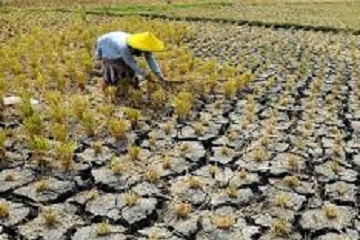
The world is warming because humans are emitting heat-trapping greenhouse gases. Many studies in recent years have investigated the effects of climate change on the future of biodiversity. Diversity and climate change have a considerable impact on the agricultural sector, especially on the fulfillment of food needs. The increased in global temperatures has an impact on the high frequency of extreme rain events in some areas that adversely affect national agricultural production. Climate diversity such as El Niño-Southern Oscillation (ENSO) and Indian Ocean Dipole (IOD) are important climatic factors affecting rainfall variability in Indonesia. The phenomenon is also related to inter-decadal climate variability through oscillation modulation.
To anticipate the impact of diversity and climate change, it is necessary to design climate change scenarios using projected short-term climate models. Therefore, two researchers, Rahmat Hidayat and Akhmad Faqih of the Department of Geophysics and Meteorology of the Faculty of Mathematics and Natural Sciences of Bogor Agricultural University (FMIPA IPB), implemented the research program on the diversity of climate in Indonesia.
This study aims to analyze the characteristics of future Indonesian rainfall diversity in various conditions and interactions between ENSO and IOD based on GCM CMIP5 output data for near-term predictive climate up to 2035. The researchers utilize global monthly rainfall data with resolution 5 x 5 km from Climate Hazards Group Infra-Red Precipitation with Stations (CHIRPS) data to represent the diversity of historical rainfall in Indonesia. The results can be used as reference data for future rainfall predictions.
"Current and future rainfall data and sea surface temperatures have been corrected prior the analysis. The results of the analysis indicated that in the condition of El Niño phenomenon and positive IOD occur concurrently, Indonesia's rainfall in the future will decrease significantly compared to the same phenomenon in the historical period, "said Rahmat.
In general, Indonesia's future rainfall diversity has different responses to various ENSO, IOD and combination conditions. The results of the analysis will be considered by policy makers for recommendations for adaptation options such as pattern and time of planting, selection of resistant varieties of climate stress, climate-related pest management needed to support national food security programs. (Wied)