A Group of Researchers of IPB Evaluated the Food Consumption Patterns and Activities for Obesity of School Children
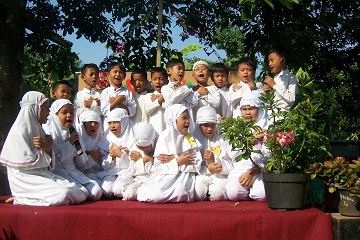
A group of researchers of the Department of Community Nutrition of the Faculty of Human Ecology of Bogor Agricultural University (FEMA IPB), namely Lutfi Febri Purwandi, Siti Madanijah and Cesilia Meti Dwiriani, implemented the research program on the relationship between of school environment characteristics with food consumption and Physical activity and obesity in children.
The school children is the next generation of nation and national development capital and is the human resource (SDM) of the nation. So it is necessary to continuously improve their quality to improve their competitiveness. Factors affecting the quality of human resources are health and nutrition.
Madanijah explained, the Indonesian is faced with the existence of more nutritional problems or obesity that occurs in school-age children. The result of Basic Health Research (Riskesdas) showed an increase in overweight and obese prevalence from 9.2% in 2010 to 18.8% in 2013. The prevalence of overweight and obesity has been increasing rapidly in both developed and developing countries across all population groups and affecting all ages. Glo-bally, obesity has reached epidemic level, with more than 1billion adults overweight and at least 300 million of them clinically obese.
In Bogor city, based on Riskesdas 2007, the prevalence of overweight children 6-14 years was 15.4% in boys and 8.6% in girls. Madanijah study itself shows the prevalence of obesity in the city of Bogor in children 9-13 years was 18.8%.
She added that it is widely accepted that increase in obesity results from an imbalance between energy intake and expenditure, with an increase in positive energy balance being closely associated with the lifestyle adopted and the dietary intake preferences, sedentary (a lifestyle with little or no physical activity), and the environment. In recent decades children's environment has changed drastically as reflected in unhealthy eating patterns and sedentary lifestyles. One of the environments that affect the incidence of childhood obesity is the school environment. The school environment is associated with high body mass index values, child food consumption, and a strong influence on the physical activity of children.
"Cross sectional design was utilized for this study, and it has been implemented on September 2014 – February 2015 at Integrated Islamic Primary School (SDIT), Bogor City. The subjects are students of class V and VI from 3 SDIT in Bogor City," she said.
The results showed that obese children's food consumption dominantly related to pocket money, nutrition knowledge, health status, educational background of father, family size, and teacher nutrition knowledge. A child's health and well-being are fostered by a home environment with engaged and skillful parenting that models, values, and encourages sensible eating habits and a physically active lifestyle. One of the factors that is most significantly linked to obesity is a sedentary lifestyle. Each additional hour of television per day increased the prevalence of obesity. children is dominantly associated with the habit of watching television or playing video games, maternal attention, physical environment and policy in school.
Schools have a responsibility to help prevent obesity and promote physical activity and healthy eating through policies, practices, and supportive environments. School health guidelines for promoting healthy eating and physical activity, including coordination of school policies and practices; supportive environments; school nutrition services; physical education and physical activity programs; health education; health, mental health, and social services; family and community involvement; school employee wellness; and professional development for school staff members are really required. "For example by providing fresh fruit as a choice of snacks in the school cafeteria and there are various game options that increase physical activity in their break time," he said. (Wied)